

Most die-cast cars never appreciate. The garage-sale bin of scratched Hot Wheels isn’t hiding a retirement fund. But certain cars do gain value, and the reasons are more predictable than most beginners assume. This guide walks through what actually moves prices, what doesn’t, and how to think about die-cast cars as a collection rather than a lottery ticket.
Why die-cast cars attract value-conscious collectors
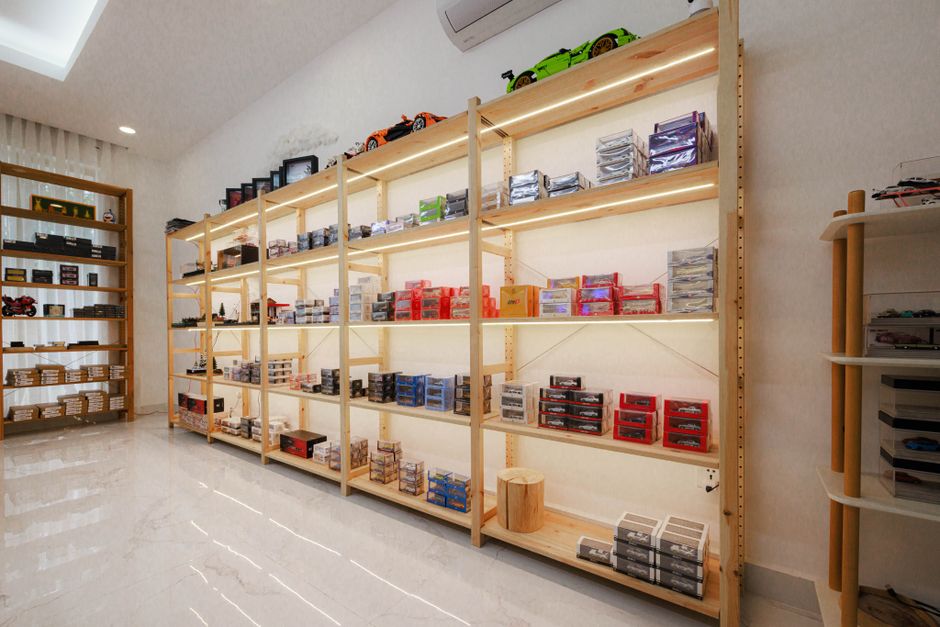
Die-cast cars sit at an unusual intersection: they’re affordable enough that anyone can start, nostalgic enough that demand is durable, and physical enough that condition and packaging create genuine scarcity. Unlike trading cards that are essentially printed rectangles, die-cast cars have manufacturing complexity, paint variations, casting changes, wheel swaps, and packaging runs all create collecting dimensions that cards don’t have. This means there are more ways for a car to be rare than just being old.
The market is also less efficiently priced than trading cards or coins. eBay sold listings for die-cast variants are frequently mislabeled, and casual sellers often don’t know what they have. For a collector willing to learn the details, this creates opportunity.
What beginners usually get wrong about die-cast values
The most common mistake is assuming age equals value. A 1970s Hot Wheels in played-with condition is worth less than a desirable 2020s release in near-mint packaging. The second mistake is treating every limited edition as automatically valuable, most “limited” runs are still hundreds of thousands of units, and actual scarcity comes from production quirks, not marketing labels.
Beginners also overpay for “complete sets” sold as bundles. Breaking a set usually yields more than selling it whole, because individual collectors need specific gaps. The seller who assembled the set is charging for their effort, but the market doesn’t reward that effort.
The final error: ignoring packaging condition. A blister card with a crease, tear, or price sticker can cut the value significantly compared to a clean card, sometimes by more than half. The car itself is only part of the product.
How to judge value in die-cast cars
Die-cast value rests on four pillars, in descending order of importance:
Rarity from production, not marketing. Real rarity comes from short production windows, regional exclusives, store-specific releases (Walmart Zamac, Target Red Editions), factory errors, and casting variations that were corrected mid-run. “Chase” cars, intentionally rare variants of a common casting, are a known game. Some are genuinely scarce; others are manufactured scarcity at predictable ratios.
Condition and packaging integrity. For post-1990s cars, the packaging is often more valuable than the car inside. Loose cars from this era are typically worth a few dollars regardless of what they cost originally. Exceptions exist for cars with documented provenance or unusual variations, but the baseline rule holds: the value is in the card.
Subject matter demand. Real-world licensed cars (Ferrari, Porsche, Nissan Skyline) consistently outperform fantasy castings. First-generation releases of a casting, especially those with metal bases before cost-cutting switched to plastic, carry premiums. Movie and pop-culture tie-in cars have demand spikes around release dates but often fade.
Grading and authentication. Professional grading for die-cast cars exists but is far less standardized than trading cards or coins. Collectors pay premiums for graded examples, but the market is thinner. A graded die-cast car takes longer to sell than a graded card. Factor liquidity into your valuation.
Authentication and condition checks for die-cast cars
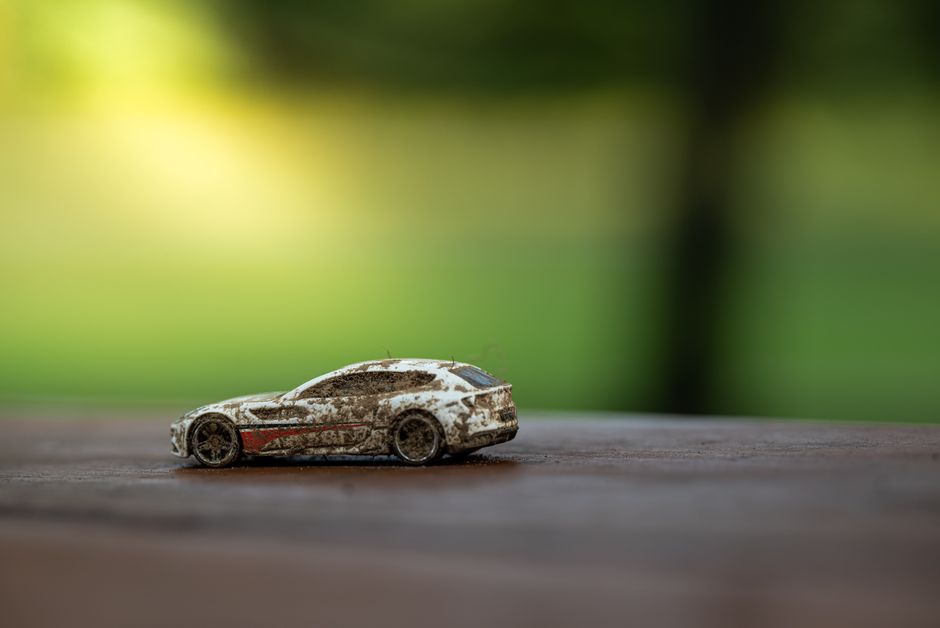
Check the rivet posts on the base. Original Hot Wheels and Matchbox have specific rivet patterns, and re-riveted cars (repainted or restored and reassembled) are common scams. Under magnification, an original rivet has a specific factory spin pattern that’s hard to replicate.
Verify the casting against known variations. Sites like the Hot Wheels Wiki and Matchbox catalog document wheel types, base text changes, and tampos (printed graphics) by year. A car that has the wrong wheels for its base year has been tampered with.
For blister cards, check the glue pattern. Original factory-glued blisters bond in a specific pattern. Re-glued cards, where someone opened a car, swapped it, and resealed, show irregular glue marks, residue, or card stock damage along the bubble seam. A UV light can reveal glue tampering that’s invisible to the naked eye.
Weight the car if you have a comparison. Restored cars with body filler or repaint can be heavier. A digital scale with 0.1g precision is enough to catch this.
Buying tips for die-cast appreciation potential
Buy what you understand before buying what’s “hot.” If you don’t know a specific casting’s variation history, you can’t tell whether the listing price is fair, high, or a steal. Specialize in one manufacturer or era first.
Look for cars that are still on shelves but already show signs of being under-ordered. Store-exclusive color variants that disappear from pegs within two weeks of release are higher-potential than mainline cars restocked for six months.
When buying online, insist on photos of all four sides of the card or box. A single front photo hides card damage, and sellers know this. If a listing has only one photo at a bargain price, the damage is on the back.
Avoid “mystery lots” and “factory sealed cases” that are actually resealed. Factory Hot Wheels cases have specific tape patterns. If the tape has been cut and replaced, the case has been picked, the desirable cars removed and common ones left behind.
Selling or holding considerations
Die-cast cars are less liquid than trading cards or coins. A desirable car at a fair price might take weeks or months to sell rather than days. Plan for holding periods of 6-18 months if you’re buying for appreciation rather than quick flipping.
Timing matters with movie and anniversary releases. Cars tied to a film franchise typically peak in the month before and after release. Waiting six months after the hype cycle often yields lower entry prices for cars you want to hold long-term.
For auctions, eBay sold listings provide the most current pricing data. But filter by “sold” not “listed”, asking prices on die-cast eBay listings are notoriously aspirational and can be 3-5x actual selling prices for the same item.
Common red flags in die-cast buying
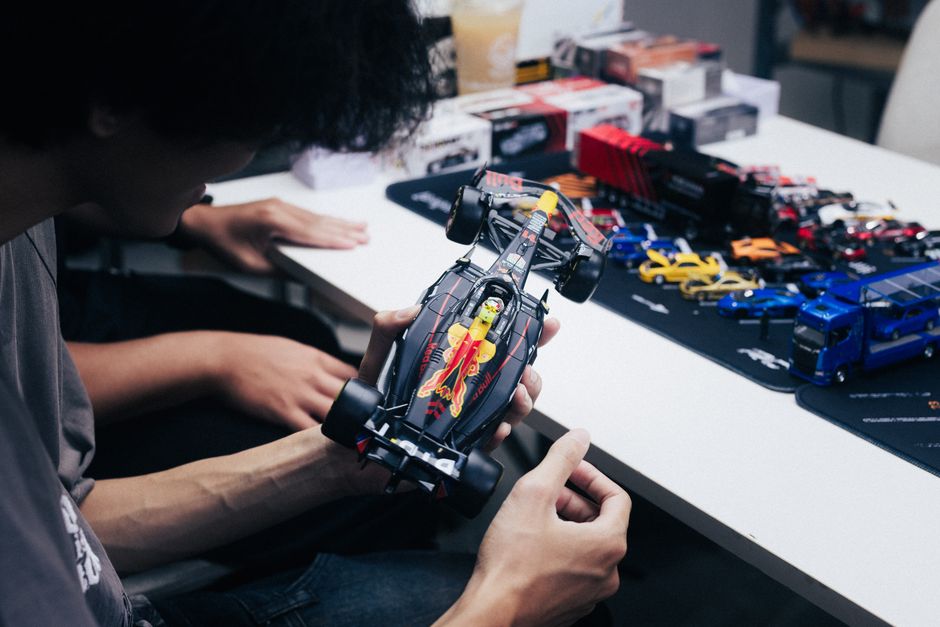
Custom cars sold as factory errors. Someone painted a car themselves and listed it as a “rare factory error.” Real factory errors have documentation on enthusiast forums and usually involve missing tampos, wrong wheels, or unpainted parts, not custom paint jobs.
“Rare” used for every listing. If a seller uses “RARE!!!” in all caps on a car that has hundreds of eBay listings at the same price, they’re not describing scarcity, they’re describing hope.
Carded cars with no back photo. This is the most common and avoidable mistake. Always request or verify the back before paying carded-car prices. Creases, tears, and punch-holes live on the back.
Pre-production and prototype claims without provenance. Legitimate pre-production die-cast cars come with documentation tracing them to a specific factory, employee, or event. If the seller’s provenance story is “I bought it at a flea market and a guy told me,” it’s almost certainly not a prototype.
Final practical advice
Die-cast collecting is a better hobby than it is an investment strategy. The cars that genuinely appreciate over time share a pattern: real production scarcity, strong subject-matter demand, and packaging condition that survived decades. Most cars won’t hit all three.
Collect what interests you first, learn the variations and market for that niche deeply, and let appreciation be a side effect of expertise rather than a goal pursued with money alone. The collectors who do well in die-cast aren’t the ones chasing trends, they’re the ones who know their niche well enough to spot a $5 car that’s actually worth $50 before anyone else does.
Notes
[1] Die-cast variation tracking relies heavily on community-maintained resources including the Hot Wheels Wiki (hotwheels.fandom.com) and hobbyDB (hobbydb.com) for casting history, wheel type catalogs, and production changes by year.
[2] eBay sold listings filtered by “sold items” provide the most current pricing data. Asking prices on active listings should not be treated as market value, the gap between listed and sold prices in die-cast is wider than in most collectible categories.
[3] Professional grading services for die-cast cars include CGA (Collectible Grading Authority) and AFA (Action Figure Authority, which grades carded die-cast). Graded die-cast is a thinner market than graded cards or coins, expect longer selling timelines.