

The loudest voices in trading cards make it sound like you need a six-figure bankroll. Instagram shows graded PSA 10 cards. YouTube shows $300 hobby box breaks. You can build a trading card collection that is fun to own, satisfying to curate, and genuinely worth more than you paid for it, on $50 a month. You will not pull a grail card every month. But you will have something better: a collection you built intentionally, not a pile of sealed product you bought because a YouTuber told you to.
Why Most Budget Collectors Go Wrong
The single biggest mistake budget collectors make is buying sealed product. A $50 retail blaster box from Target contains roughly $5-10 worth of cards on average, sometimes less. The packaging, the thrill of ripping packs, and the lottery-ticket psychology are all priced into the product. You are paying for the experience, not the cards inside.
The second mistake is chasing hype. When a card spikes because a player had a good week or a streamer pulled one on camera, the price has already adjusted before you can act. By the time a card hits your radar as “hot,” you are buying from sellers who are thrilled to offload it at the new elevated price.
The third mistake: not tracking spending. Fifty dollars a month does not feel like much, but $600 a year on loose packs, shipping fees, and impulse eBay purchases adds up to a collection of scattered $2 cards with no theme and no resale value.
How to Make $50 Actually Work
Every dollar of your monthly budget should go toward cards, not packaging, shipping, or the markup on sealed product. That means singles, not packs. It means waiting for the right listing, not buying the first one. And it means picking a focus and sticking with it.
A focused collection on $50 a month is more impressive after one year than a scattered collection on $500 a month. The person who owns twenty graded Larry Bird rookies, even low-grade examples, has a collection that tells a story. The person who bought one of everything has a drawer full of randomness.
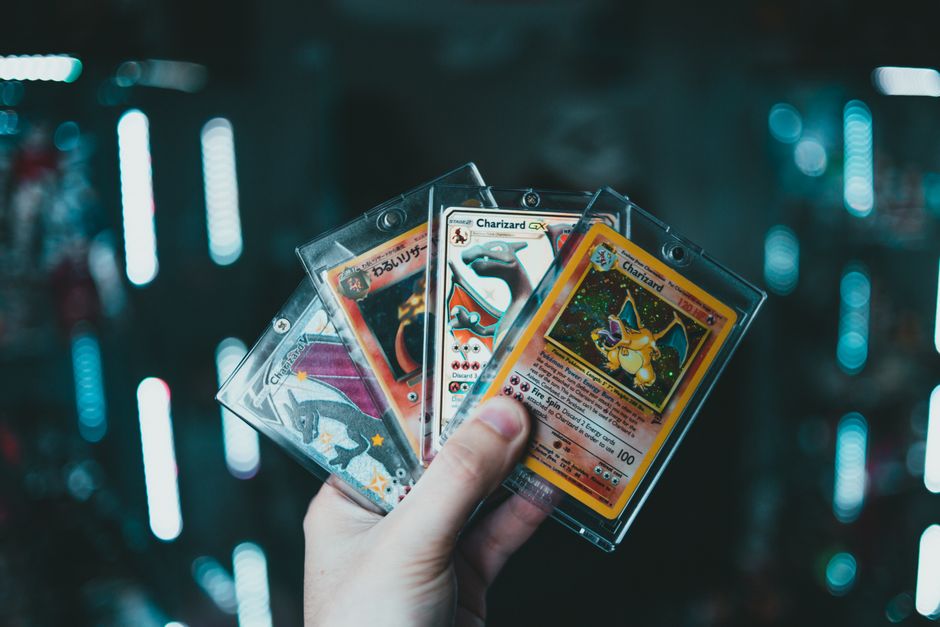
Build a singles-first buying habit. Spend $45 of your monthly $50 on exactly one or two cards that matter. The remaining $5 covers shipping, supplies, and the occasional cheap pickup. This forces research, careful evaluation, and only pulling the trigger on cards you genuinely want to own long-term.
Pick one lane and own it. The best budget collections have a thesis. Examples that work: “every Topps base card of Ken Griffey Jr.,” “Pokémon full-art trainer cards under $15,” “rookie cards of Hall of Fame shortstops,” “illustrator rares from Scarlet & Violet era.” A thesis keeps you from buying cards just because they are cheap. Cheap and irrelevant is still wasted money.
Learn to evaluate condition yourself. At the $10-40 price point, you will not be buying professionally graded cards every month. You will be buying raw singles from eBay, card shows, and local shops. Learning to assess centering, corner wear, and surface scratches from listing photos is a skill that pays for itself many times over. A raw card that looks like a strong 8 or 9 is a much better buy than a raw card with obvious corner wear that the seller is marketing as “LP” when it is closer to damaged.
Related: Understanding grading is half the battle. Read our trading card grading guide for a full breakdown of PSA vs BGS vs CGC and how to evaluate condition like a pro.
Where to Buy
eBay is the default for singles under $50. The selection is vast, the buyer protection is real, and sold listings provide transparent pricing history. The card you want at $35 is listed by three sellers at $45, and one of them will accept an offer at $35 if you wait. Set up saved searches and check them twice a week instead of impulse-browsing.
Card shows are the budget collector’s secret weapon. Sellers bring inventory they do not want to haul home. Cash offers at the end of a show, especially on the last day, get accepted more often than eBay offers. Know prices before you walk in: eBay sold listings and 130point.com give you real transaction data.
Local card shops vary widely. Spend one visit comparing prices on your phone to eBay sold listings. That tells you whether the shop is a buying source or just a browsing destination. Whatnot breaks and live auctions are dangerous on a budget. The social pressure and countdown timers are designed to make you overspend. Stay away until you have six months of disciplined singles buying under your belt.
Storage That Protects What You Are Building
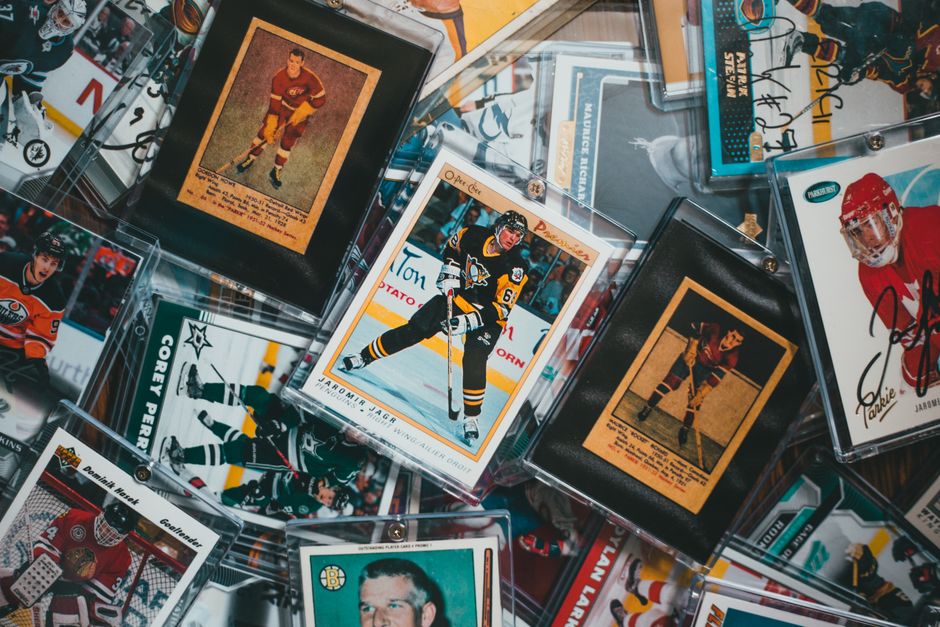
A collection built on $50 a month deserves proper protection from day one. For raw singles under $20: penny sleeves inside top loaders. This combination costs roughly 15 cents per card and protects against surface scratches, corner dings, and bending. For cards in the $20-50 range: one-touch magnetic holders at about $1.50 each. An entire year’s collection of 12-15 cards fits in a single shoebox-sized container.
Keep the collection in a cool, dry place away from direct sunlight. A bedroom closet shelf works. An attic or basement does not, humidity and temperature swings destroy cardboard. If you live somewhere humid, silica gel packets in the storage box cost almost nothing and prevent warping.
Related: Proper storage prevents value loss. See our guide on trading card storage mistakes for the common errors that silently ruin collections.
Track your spending in a simple spreadsheet: date, card, purchase price, source, condition note. After one year, you will know exactly what your collection cost and roughly what it is worth. Most collectors cannot answer those two questions. You will be able to.
Common Red Flags
eBay listings with one blurry photo. A seller who cannot be bothered to take clear photos of all four corners is betting you will not notice the damage. Move on.
“Pack fresh” as a condition descriptor. Cards come out of packs with centering issues, print lines, and corner damage all the time. Judge the card in the photo, not the story.
Mystery packs and repacks. Someone bought a collection, pulled out the valuable cards, and is selling the leftovers in a sealed mystery pack with a “chase card” nobody ever hits. The math on these is worse than retail blaster boxes.
“PSA 10 candidate” in raw card listings. If the card is a legitimate PSA 10 candidate, the seller would submit it. They either know it will not gem, or they have not evaluated it properly. Either way, you are buying a raw card, not a potential slab.
Sellers who do not accept returns on raw cards. eBay’s money-back guarantee overrides “no returns” policies when the item is not as described, but sellers who explicitly refuse returns are signalling that they expect disputes. Avoid them.
Final Practical Advice
Twelve months from now, a $600 collection built one thoughtful card at a time will look smarter than a $600 pile of opened blaster boxes and loose commons. The singles-first approach works because it flips the hobby’s default math: instead of paying a premium for the experience of opening something unknown, you pay market price for exactly the card you wanted.
The discipline is the hard part. It is genuinely more fun to rip packs than to wait three weeks for the right eBay listing. But after one year, when you can look at a small box of cards that each have a reason for being there, you will understand why patient collectors outperform impatient ones at every budget level.
Start with the card you have wanted for years but never bought because it felt too expensive. On a $50 monthly budget, that card might be your first month’s only purchase. That is not a failure. It is the beginning of a collection that means something.
Notes
[1] eBay sold listings and 130point.com are the standard pricing references for raw trading card singles in the sub-$50 range. Filter by “sold” to see actual transaction prices, not aspirational asks.
[2] Penny sleeves and top loaders (BCW or Ultra Pro) cost approximately $0.10-0.15 per card at bulk pricing. One-touch magnetic holders (Ultra Pro 35pt) cost approximately $1.00-1.50 each depending on brand and quantity.
[3] Card show pricing strategy is based on community-reported experiences across Blowout Forums and the r/baseballcards and r/PokemonTCG subreddits. End-of-show cash offers are a widely discussed budget tactic.
🛒 RECOMMENDED FOR TRADING CARD COLLECTORS
- Dry & Dry 5 Gram Silica Gel Packets (50 Pack) — Premium indicating silica gel for humidity control in card storage boxes. Prevents warping, mold, and moisture damage to your raw singles. Color-changing beads show when it’s time to recharge. ~$12
Disclosure: This article contains affiliate links. GrandCollector may earn a commission at no extra cost to you.