
Someone handed you a box of old coins, or you found them clearing out a relative’s home. The first instinct is usually wrong: cleaning them, listing them online, or dropping them at a dealer without looking.
The most expensive mistakes with inherited coins happen in the first 48 hours. A cleaned coin loses value. A rare variety gets mixed in with the spendable change.
Key takeaways
- Why People Rush and What That Costs Them
- What to Look at First Without Touching Too Much
- Spotting Coins Worth a Closer Look
Why People Rush and What That Costs Them
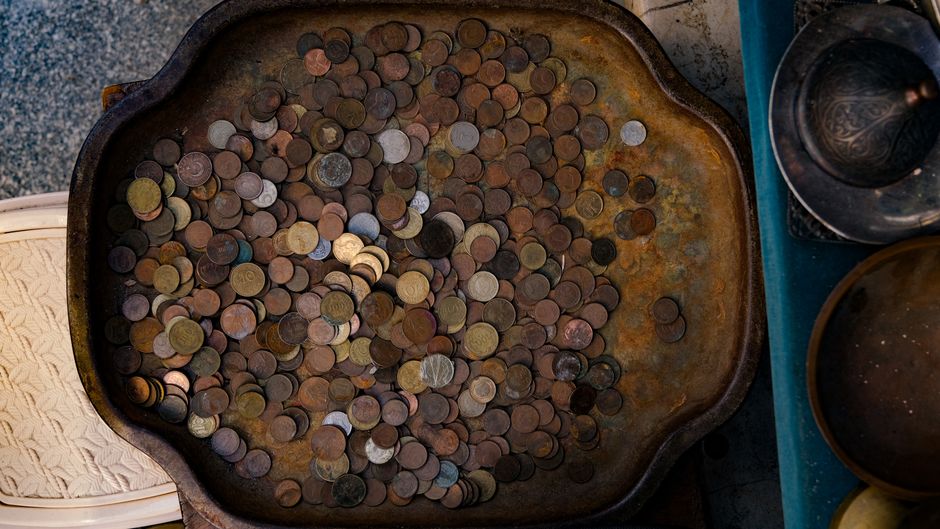
Inherited coins rarely arrive with an inventory. They come in old jars, cigar boxes, envelopes, and bank wrappers. The natural reaction is to empty everything onto a table and start sorting. That part is fine. The problems start when someone reaches for polish, baking soda, or a coin-cleaning cloth.
Cleaning a coin is the single most common way to destroy its numismatic value. A coin with original surfaces, even if toned or dark, is worth more than the same coin that has been dipped, scrubbed, or polished. A “cleaned” designation on a grading label drops the coin into a lower tier of desirability. So rule one: do not clean anything. Not with water, not with a cloth, not with anything you saw on YouTube. If you want to understand exactly how cleaning affects a coin, we have a detailed guide on spotting cleaned coins.
What to Look at First Without Touching Too Much
Sort coins by type first. Separate US from foreign, silver-looking from modern clad, and anything still in original packaging, proof sets, mint sets, commemorative holders, from loose coins.
Handle coins by the edges only, using clean, dry hands or cotton gloves. Fingerprints leave oils that etch into copper and silver surfaces over time.
Once sorted, look for these basic markers:
- Dates and mint marks. US coins before 1965 containing silver are worth checking. Coins from the 19th century deserve a closer look regardless of apparent condition.
- Metal type. Silver coins feel heavier than modern clad. A magnet helps, US silver coins are not magnetic, but modern steel-core coins sometimes are.
- Anything still sealed. Unopened proof sets, original government packaging, and old bank rolls should stay sealed. Opening them cuts their premium.
Spotting Coins Worth a Closer Look
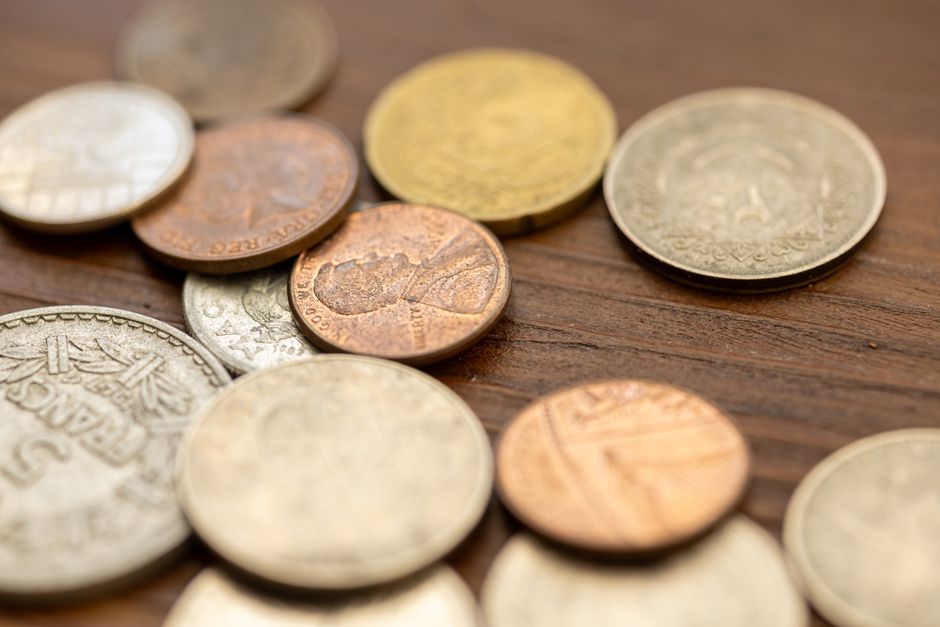
Most inherited collections are a mix: some keepers, some spenders.
Coins to set aside:
- Any US coin dated before 1930
- Large cents, half cents, two-cent and three-cent pieces
- Silver dollars, especially Morgan and Peace dollars
- Gold coins of any kind
- Error coins, off-center strikes, missing letters, doubled dates (use a loupe)
- Proof or uncirculated coins in original holders
Coins likely worth face value:
- Circulated clad coins from 1965 onward
- Heavily worn common-date wheat pennies (1940s-1950s)
- Damaged, bent, holed, or corroded coins
- Common foreign coins from recent decades unless they contain silver
This quick sort saves enormous time. It prevents you from spending an afternoon on a 1974 nickel and missing a 1909-S VDB penny sitting right next to it.
How to Check Condition Without Overhandling
For coins that make the shortlist, a basic condition check with a 5x to 10x loupe helps you decide whether to keep, sell, or send for grading. Look at these areas:
- High points. On a Morgan dollar, check Liberty’s cheek and the eagle’s breast. On a Lincoln cent, check the wheat stalks or cheekbone. The highest raised areas wear first.
- Fields. The flat background areas, free of heavy scratches, hairlines, or pitting?
- Rims. A full, sharp rim suggests light circulation. A worn-down rim suggests heavy use.
- Luster. Original mint luster, the cartwheel effect under a light, is a strong positive. Dull, lifeless surfaces often indicate cleaning or heavy wear.
You are not grading the coin to a final number. You are deciding whether it is worth showing to an expert. A coin with strong detail, original surfaces, and no obvious problems deserves a professional opinion.
Common Red Flags That Signal Damage, Not Rarity
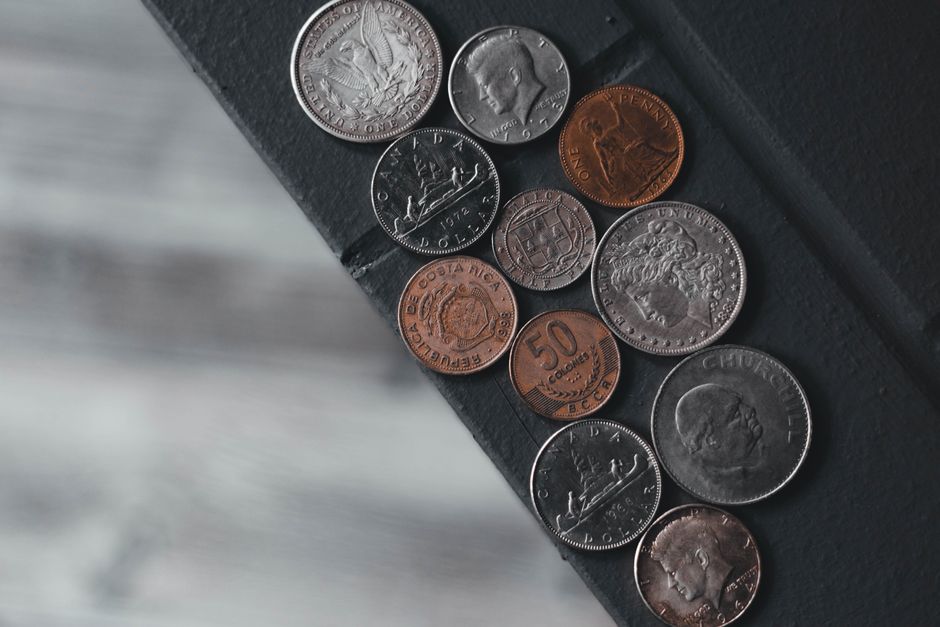
Beginners often mistake damage for valuable errors. Here is what is usually just damage:
- A hole. Drilled for jewelry. Not an error, worth melt at best.
- A bent or flattened coin. Not a striking error. Damaged.
- Glue, tape residue, or green corrosion. PVC damage from old plastic flips is destructive.
- A “double” image from wear. Machine doubling looks like doubling but adds no value. True doubled dies show crisp, separated lettering.
- Shiny but hairlined. Cleaned, then polished. Under magnification, fine parallel scratches everywhere. Avoid.
If you are unsure whether something is an error or damage, take clear photos and check online resources like the PCGS CoinFacts app or the NGC Coin Explorer. Do not let a dealer’s quick dismissal be your only opinion.
Before You Sell: What to Do First
Resist the urge to sell quickly. The first offer is rarely the best. If the collection is substantial, read our guide to selling inherited coin collections without getting ripped off before accepting any offer.
Steps to take before selling:
- Photograph everything. Clear shots of both sides, any packaging, and notes from the original owner.
- Make a simple list. Date, mint mark, denomination, and a brief condition note. A spreadsheet or paper list is fine. Do not assign grades or values yet.
- Separate potential grading candidates. Coins in unusually good condition, rare dates, gold coins, and error coins may be worth sending to PCGS or NGC. A graded coin in a slab sells for more and sells faster than a raw coin, the buyer takes no risk on authenticity.
- Get at least two opinions. Show the coins to more than one dealer, or use an online community with experienced eyes. Coin shows are excellent for this, multiple dealers in one room, no obligation to sell.
Dealers need to buy below retail to make a profit. That is how the market works. But never take the first cash offer without checking elsewhere.
When Sending Coins Away Makes Sense
Grading companies like PCGS and NGC authenticate, grade, and encapsulate coins in tamper-evident holders called slabs. This service costs roughly $20 to $40 per coin for economy service, plus shipping and insurance. It is worth it for coins that:
- Are worth several hundred dollars or more even raw
- Have a large price gap between one grade and the next (e.g., MS-64 vs MS-65 Morgan dollar)
- Need authentication, rare dates, key varieties, and gold coins are frequently counterfeited
For common-date coins in circulated condition, grading fees usually exceed the coin’s value. A circulated 1941 Mercury dime does not need a slab. A 1916-D Mercury dime in any condition probably does.
What About the Coins That Are Not Worth Much?
Most inherited collections are not treasure troves. The bulk may be worth face value or a small premium over melt for silver content.
Options for common coins:
- Keep a few. Pick one or two pieces that remind you of the person. Put them in a small holder.
- Sell silver coins for melt. A coin shop or online bullion dealer pays based on silver content. Call ahead for the rate.
- Spend the clad. Post-1964 quarters, dimes, and halves without silver are worth face value.
- Donate. Some coin clubs accept donations for youth programs.
Not every coin needs to be sold. Some are just worth remembering.
Final Practical Advice
An inherited coin collection is part mystery and part responsibility. The person who assembled it cared enough to keep each coin, even the ordinary ones. Your job is not to turn it into the maximum possible cash in the shortest possible time. It is to sort carefully, damage nothing, learn what you have, and then decide.
Do not clean. Handle by the edges. Separate the obvious spenders from the potential keepers. Photograph everything. Get a second opinion before accepting an offer. If a coin might be worth grading, spend the money on authentication rather than guessing and losing the premium later.
The best outcome is not always the highest sale price. Sometimes it is keeping a single silver dollar your grandfather carried, and passing it on.
Notes
[1] The American Numismatic Association (ANA) and major grading services including PCGS and NGC advise against cleaning coins, altered surfaces are treated as damage in the grading process.
[2] US silver coin compositions: dimes and quarters 1964 and earlier are 90% silver. Half dollars 1964 and earlier are 90% silver; 1965-1970 halves are 40% silver. Source: the Red Book (A Guide Book of United States Coins).
[3] Coin photography: natural daylight or neutral white lamp, both sides against plain background, no flash. Standard guidance from Heritage Auctions and Stack’s Bowers.