

Before buying a used LEGO set, confirm its identity, what is included, and the condition of the parts. Ask for the exact set identifier, clear photos, and an honest inclusion list. Focused questions can reveal missing pieces, mixed-in minifigures, or damage hidden by a quick listing photo.
Key takeaways
- Why a careful check matters
- What beginners usually get wrong
- How to confirm the set and its contents
Why a careful check matters
A second-hand set can include an assembled model, loose parts, minifigures, accessories, printed elements, stickers, instructions, and packaging in different condition. Consider each part separately. If the seller says the set is mostly complete, use the same discipline you would use when checking a used LEGO set for completeness and condition.
What beginners usually get wrong
A complete-looking model is not necessarily a complete set. A photo may show the main build but omit small accessories or specialized elements. Minifigures and accessories may not belong to the claimed set; small pieces can be missing, replaced, or mixed in.
Ask to see loose parts and the assembled model. Ask the seller to describe anything missing, substituted, or uncertain.
How to confirm the set and its contents
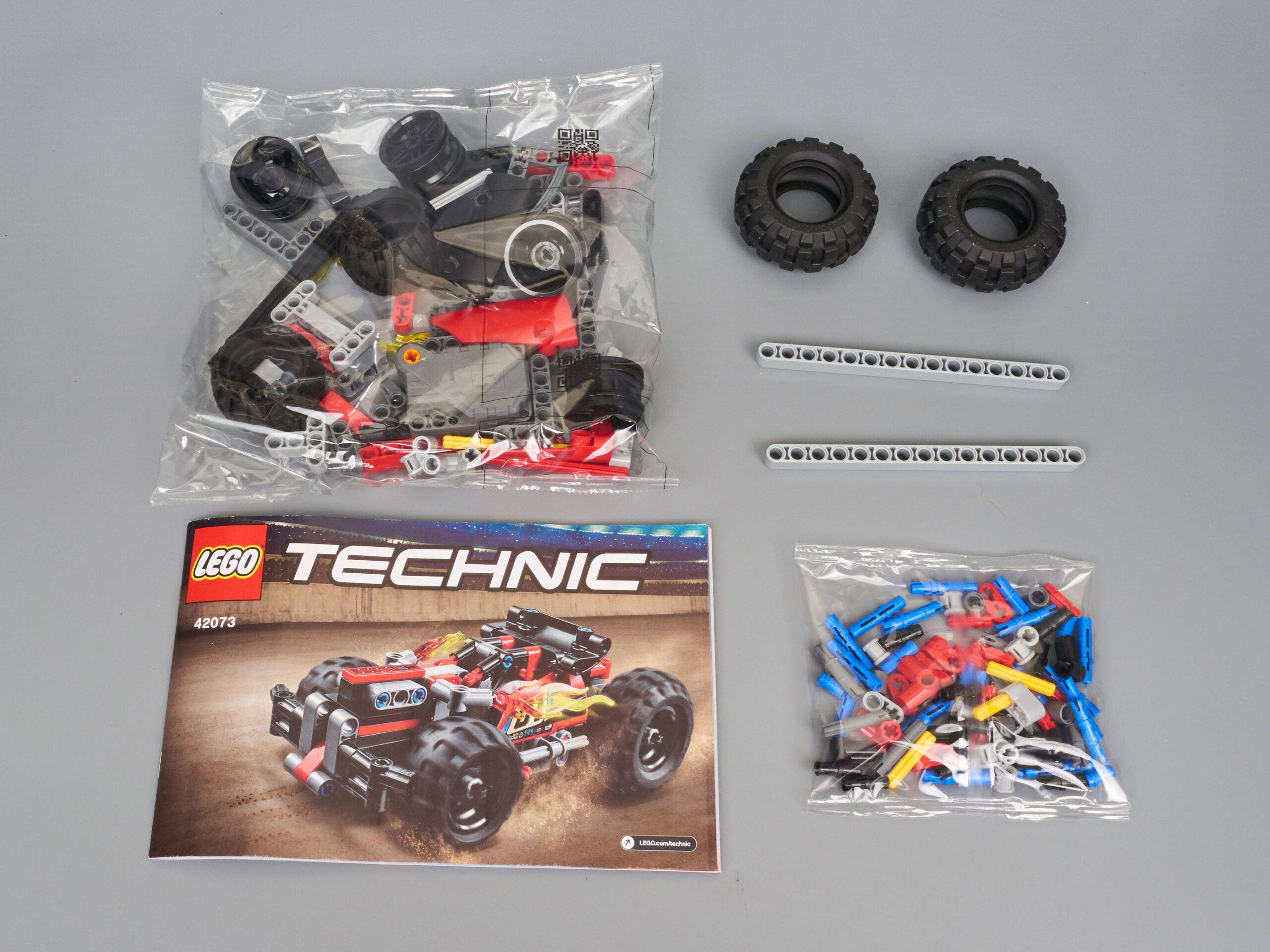
Start with the exact set identifier. Compare the included parts, minifigures, accessories, and specialized elements with a reliable parts inventory or the set’s instructions. This identifies missing pieces instead of guessing from the finished model.
Check printed elements and stickers separately. Ask whether instructions or packaging are included, and request photos rather than assume they come with the set.
How to inspect condition
Look for cracks, stress whitening, warping, severe scratches, and discoloration, which can affect assembly or appearance. Ask for close photos of questionable areas, especially when the listing uses distant shots or strong lighting.
Ask whether the set was kept in a smoke-free, pet-free, dry place, and whether it was exposed to heat, sunlight, moisture, or strong odours. LEGO recommends dry storage away from heat and direct sunlight; temperatures above 40°C may make bricks brittle or discolour over time.[1] Storage can also affect cleanliness, colour, odour, and the condition of paper components.
Buying tips before paying
Keep your questions specific: What is the exact set identifier? Are all parts, minifigures, accessories, and specialized elements included? Are there cracks, whitening, warping, scratches, or discoloration? Are the instructions, stickers, printed elements, and packaging present? How was it stored?
Request photos of the assembled model, loose parts, and any components that affect your decision. If the seller cannot provide enough information to confirm identity, contents, and condition, request more evidence before paying.
What missing details can tell you
A missing answer is not proof that a set is damaged or incomplete. It means part of the purchase remains unconfirmed. Separate what the listing shows from what the seller has established, then decide whether you are comfortable with the uncertainty.
You do not need every answer from one photograph. You need enough information to understand the set’s identity, contents, and condition.
Common red flags
- No exact set identifier, or photos that do not clearly match the claimed set.
- An assembled model is shown, but loose parts and small accessories are not.
- Minifigures or accessories are pictured without confirmation that they belong with the set.
- Close-up condition photos are unavailable when cracks, whitening, warping, or discoloration could change your decision.
- The seller cannot describe storage conditions or will not clarify what is included.
Final practical advice
Use a sequence: identify the set, compare its contents with an inventory or instructions, inspect the parts, check the separate components, and ask about storage. Note what is confirmed and what remains unknown. If the information is not enough, treat the purchase as higher risk and ask for more evidence before paying.
Notes
[1] LEGO, “Sorting and storing your LEGO bricks,” official storage guidance, accessed 2026-09-30. The source recommends dry storage away from heat and direct sunlight and warns about temperatures above 40°C.
[2] The remaining checklist is practical buying guidance: confirm the exact set identity, request evidence from the seller, compare the contents with a reliable inventory, and record what remains unconfirmed.