
Coin collecting offers a tangible connection to history. Whether you’re just starting or looking to expand your collection, these ten remarkable coins span centuries and continents, each with a compelling story to tell.
We’ve included a mix of affordable and premium options, focusing on coins minted in 1964 and earlier.
Without further ado, here is the list of the top 10 old coin collections:
10 Old Coin Collection:
1. Justinian II Gold Solidus (692-695 AD) – The First Portrait of Christ
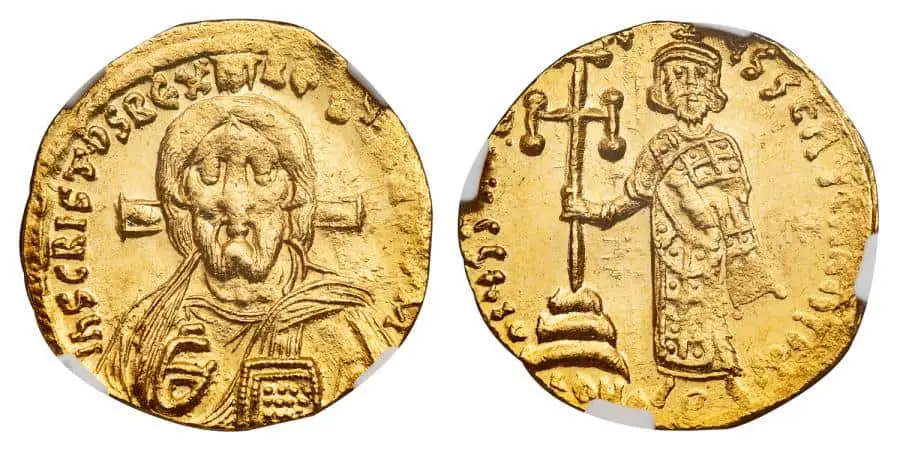
This Byzantine gold solidus holds a unique place in numismatic history: it’s the first coin to feature Jesus Christ in human form.
Emperor Justinian II commissioned this revolutionary design following the Quinisext Council of 692, which decreed that Christ should be depicted as a man rather than symbolically as a lamb.
The obverse shows Christ as Pantokrator (Ruler of All) holding the Gospels, while Justinian appears on the reverse, humbly identifying himself as a “servant of Christ.”
Some scholars believe this bold artistic choice was partly a response to Islamic coinage of the era.
These coins typically sell for $5,000 to $50,000 or more, depending on condition.
2. 1943 Lincoln Copper Penny – America’s Most Famous Error Coin
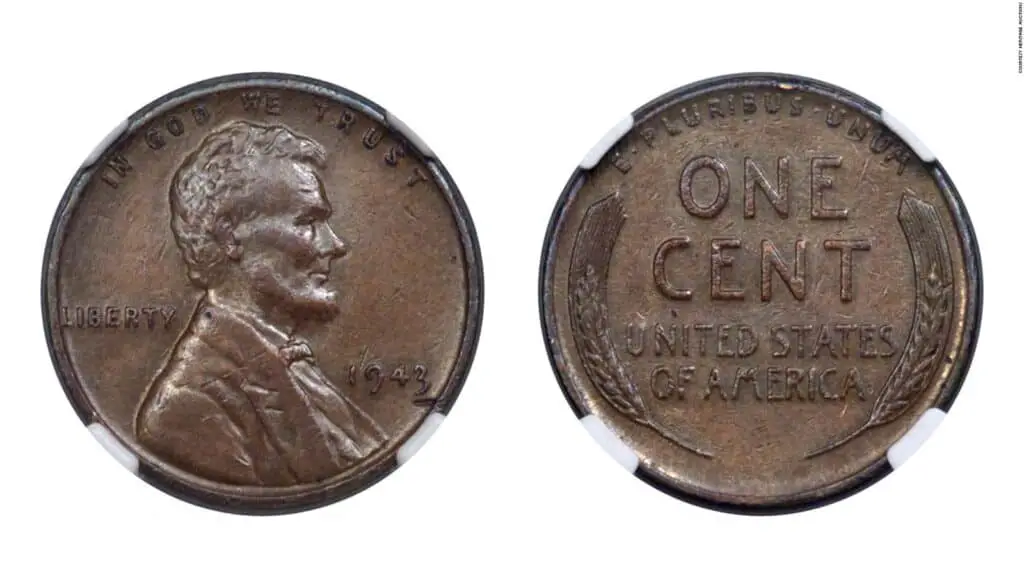
During World War II, copper was desperately needed for ammunition, so the U.S. Mint switched to zinc-coated steel for 1943 pennies.
But a small number of copper blanks from 1942 remained in the presses, creating one of numismatics’ greatest rarities. Only 20 to 27 genuine examples are confirmed to exist today across all three mints.

The 1943-D is unique – just one specimen is known. In 2010, that Denver example sold for $1,700,000. Be warned: counterfeits abound, typically copper-plated steel cents or altered dates from 1945, 1948, or 1949.
A genuine 1943 copper cent won’t stick to a magnet and weighs approximately 3.11 grams.
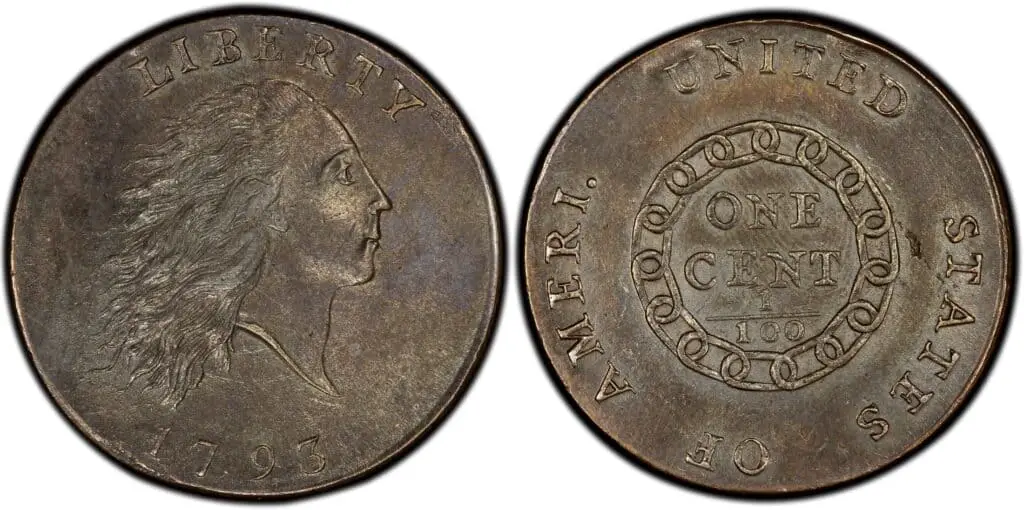
3. 1793 Chain AMERI. Cent – Where American Coinage Bega
The Chain cent represents the dawn of American coinage. Struck at the Philadelphia Mint over just twelve days in early March 1793, approximately 36,103 pieces were produced.
The “AMERI.” variety is especially significant – the engraver ran out of space and had to abbreviate “AMERICA.” Contemporary critics weren’t kind: newspapers complained that Liberty looked “in a fright” and that the chain symbolism was “a bad omen for a country which had recently secured its freedom.”
Despite the harsh reviews, these coins are now treasured artifacts. About 1,000 survive today, with even heavier-worn examples commanding thousands of dollars.
4. 1928 Kweichow “Auto Dollar” – The World’s First Car CoiN
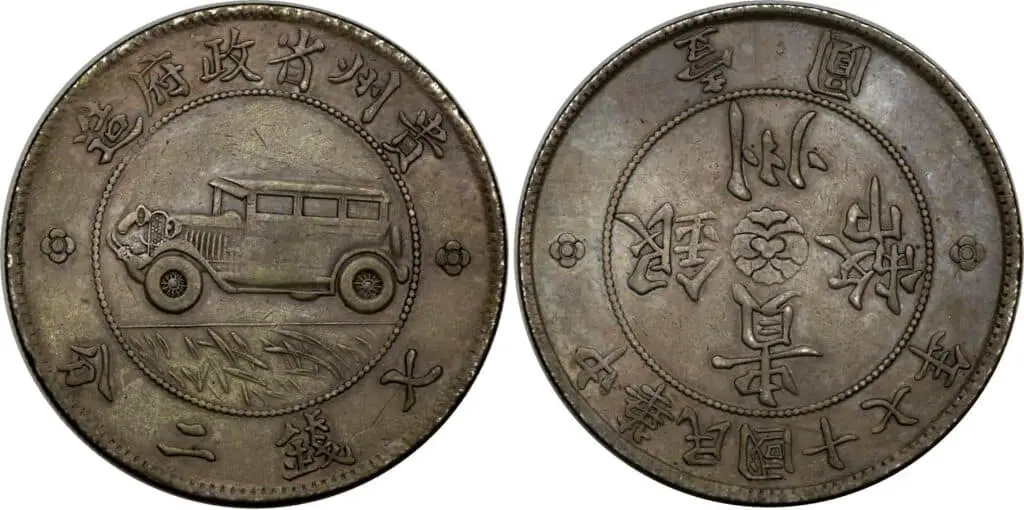
This Chinese silver dollar tells one of numismatics’ most colorful stories.
Provincial warlord Zhou Xicheng controlled Kweichow (modern Guizhou), one of China’s most isolated regions.
He owned the only car in the province – reportedly a seven-seater American automobile that had been dismantled, carried over mountains on foot, and reassembled.
To commemorate the completion of the Kweichow Provincial Highway, Zhou minted this coin featuring his beloved car.
Advisors convinced him not to put his portrait on it (other warlords who did often met bad ends), but he secretly embedded his name in the grass design below the car.
Tragically, Zhou was ambushed and killed on that very highway in 1929. Approximately 648,000 were minted, and they remain the most famous Chinese commemorative coins of the 20th century.
5. 1787 Fugio Cent – Franklin’s “Mind Your Business” Coin
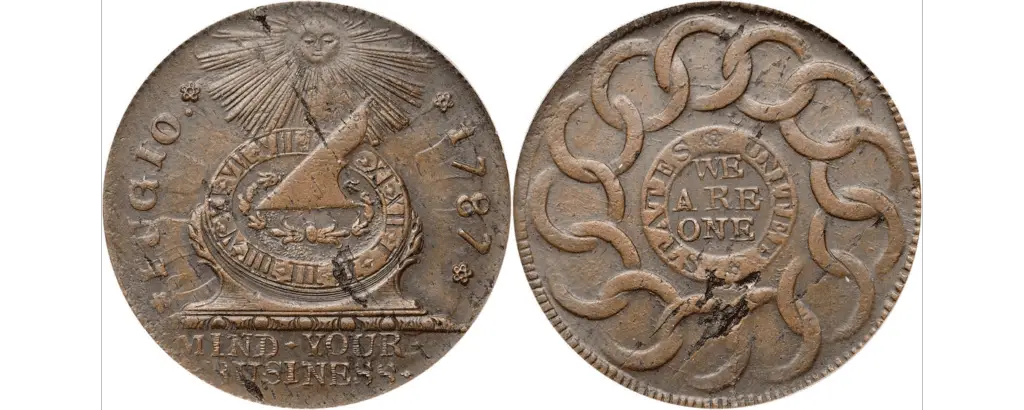
Before the U.S. Mint existed, Congress authorized this copper cent in April 1787.
The design is widely attributed to Benjamin Franklin, featuring his characteristic wit sundial with “FUGIO” (Latin for “I fly,” referring to fleeting time) and the blunt advice “MIND YOUR BUSINESS.”
The reverse shows thirteen linked circles representing the United States with “WE ARE ONE.” About 400,000 were contracted to be produced, though the actual number was lower due to the contractor’s shenanigans with the federal copper supply.
These coins represent America’s first official coinage and range from a few hundred dollars in poor condition to several thousand in uncirculated condition.
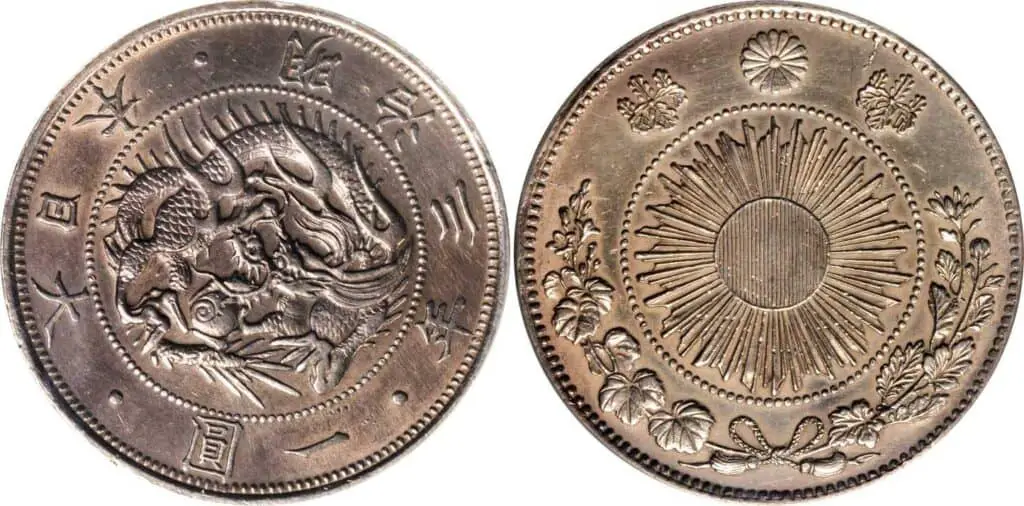
6. 1870 (Meiji Year 3) Japan One Yen – The Dragon Dollar
Japan’s modernization under Emperor Meiji included adopting Western-style coinage.
7. 1953 Canada “Shoulder Fold” Penny – A Royal Transition
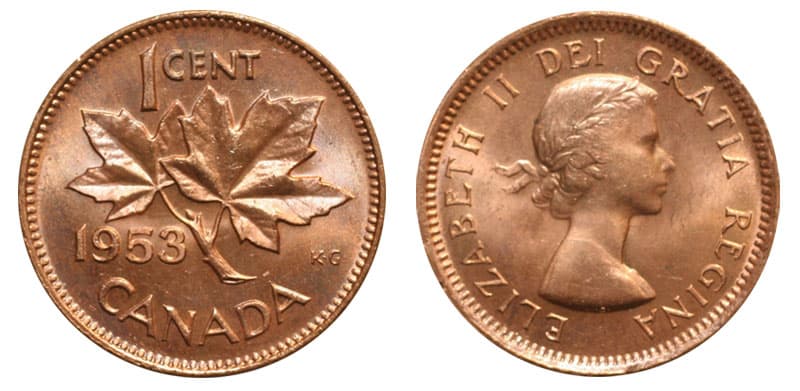
The coronation of Queen Elizabeth II in 1953 required new coinage across the Commonwealth. Canada faced an interesting challenge: the initial portrait design had relief too high for efficient striking.
Chief Engraver Thomas Shingles modified the design, creating two distinct varieties. The original “Shoulder Fold” (SF) version shows a strap or fold in the Queen’s gown at the shoulder, while the modified “No Shoulder Fold” (NSF) version removes this detail.
Both varieties were struck in standard copper composition (98% copper). Collectors prize complete sets containing both varieties from 1953-1955, with the 1955 NSF being the key rarity.
8. 1881 Haiti One Gourde – Caribbean Silver
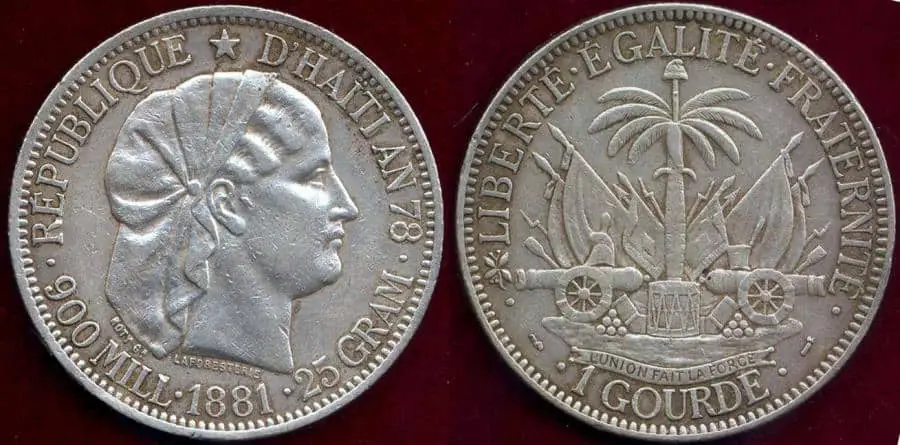
In 1881, Haiti reformed its currency and pegged the gourde to the French franc at a rate of 5 francs to 1 gourde.
The resulting silver coins were struck in Paris and feature a classical design: the obverse shows a female head wearing a coronet with “REPUBLIQUE D’HAITI” around the border, while the reverse displays a wreath surrounding the denomination.
These coins marked Haiti’s return to silver coinage after years of monetary instability. As one of the smaller Caribbean nations’ silver issues, the 1881 Gourde offers collectors an affordable entry into Latin American numismatics while representing an important moment in Haitian economic history.
9. Swiss 5 Francs “Head of Helvetia” (1888-1916) – Alpine Elegance

Switzerland’s silver 5 franc coins of this era feature one of the most beautiful designs in European coinage.
The obverse, designed by Karl Schwenzer, shows Helvetia (the female personification of Switzerland) in profile, wearing a garland with edelweiss – the iconic alpine flower.
The reverse displays the Swiss federal coat of arms surrounded by oak and laurel branches. Struck at the Bern Mint (indicated by the “B” mintmark) in .900 silver, these substantial coins contain nearly a full ounce of silver. Various dates from this series remain available to collectors, with some years being scarcer than others.
1932-S Washington Quarter
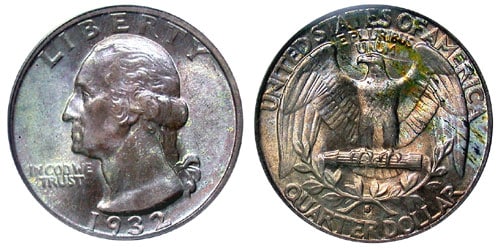
The Washington quarter series began in 1932 to commemorate George Washington’s 200th birthday.
It was originally planned as a one-year commemorative, but proved so popular that it became the permanent design.
The Great Depression severely limited coin production that year, making the San Francisco (S) and Denver (D) issues exceptionally scarce.
The 1932-S holds the distinction of the lowest mintage in the entire Washington quarter series at just 408,000 pieces. Even in average circulated condition, these coins command premiums of $100 or more.
In June 1934, The Numismatist reported that collectors could still purchase uncirculated examples directly from the Treasury for face value plus postage – a bargain that seems almost unbelievable today.
Before you go…
As you can see, an old coin collection is a great way to add value to your collection. Not only do they have historical significance, but they’re also scarce and in high demand by collectors. So if you’re looking for something different and unique, add an old coin collection to your list!
Check out my next article: “10 of The Most Valuable Canadian Coins Ever.”
Related Articles:
- 10 of the Best Euro Coin Collections to Have in 2023
- 8 Rare Wheat Pennies: That You Want To Have In Your Collection
- 5 Rare 10p Coins You Might Own & Where You Can Find It
Fact checked: June 2026. Coin details, historical context, and valuation ranges reflect the numismatic record as of this review. Individual coin values may vary based on grade, market conditions, and authenticity.