

Disclosure: This article may contain affiliate links. If you buy through them, GrandCollector may earn a commission at no extra cost to you.
A suitable coin holder isn’t always the cheapest or most convenient one. Flexible plastic, aging paper, rubber, foam, wood, coatings, and adhesive can introduce unwanted residue or vapors into a small enclosed space. Look at the material as well as the coin. Tackiness, oily film, strong odor, yellowing, brittleness, green deposits, and residue are warning signs, even when they do not identify the exact material.
Key takeaways
- Why Storage Material Matters
- What Flexible PVC Looks Like
- How Paper and Cardboard Age
Why Storage Material Matters
A coin may sit inside the same holder for years. If the holder or envelope is breaking down, residue can remain close to the coin for a long time. Humidity, temperature, and ambient air can make PVC residue and corrosion-related problems worse.
This is why storage belongs in collection care, not simple display choice. GrandCollector’s guide to coin-storage mistakes covers broader handling habits; this article narrows the focus to the materials around the coin. A holder can reduce scratching while still creating chemical risk. Fit is only the starting point. Ask whether the material is stable, deteriorating, or leaving anything on or near the coin.
What Flexible PVC Looks Like
PVC means polyvinyl chloride. Flexible PVC is used in some soft flips, pages, and holders. As it ages, plasticizer can migrate out of the material and leave an oily, sticky, or chemically tacky film. On copper and copper-alloy coins, PVC-related deposits may look green, cloudy, pale, or hazy. Green spots, globs, or slime should be treated as a warning sign, not as attractive patina.
Do not treat one visual symptom as conclusive proof of PVC exposure. Examine the holder and coin together. Is the plastic unusually soft or flexible? Does the surface feel tacky? Is there oily film inside the pocket? Does the material look cloudy or degraded? Several signs together make the storage choice more concerning.
Never burn a flip or use another destructive test to identify plastic. The smell of a burning material is not a safe diagnostic method. If the composition is unknown and the holder is breaking down, replace it with a known suitable holder.
How Paper and Cardboard Age
Paper envelopes and cardboard storage can look ordinary while changing noticeably with age. Yellowing, browning, brittleness, a musty odor, flaking edges, and visible adhesive residue all suggest that the material deserves closer attention. Unspecified paper or cardboard can contribute to toning, staining, or corrosion over long storage periods, especially when moisture is present.
Older envelopes should not be judged by appearance alone. Clean-looking paper may still be a poor long-term choice, while discoloration is a reason to stop assuming the material is stable. For paper storage, acid-free rag paper is the safer standard identified by the Canadian Conservation Institute. Coins should also be stored individually so one coin does not rub against another or share residue directly.
Cardboard boxes, paper labels, and folded envelopes can trap dust and moisture around the coin. If a paper container is brittle, smells musty, or sheds fibers, handle it gently and plan a controlled transfer instead of forcing the coin out.
Why Rubber, Foam, and Adhesives Deserve Suspicion
Rubber bands, rubberized materials, and questionable foams should not sit against coins for long-term storage. If they become sticky, crumbly, stained, or strongly odorous, treat them as deteriorating material and move the coin to a known holder. Direct contact is the concern because residue can remain against the coin surface.
Adhesive-backed holders, labels, and envelopes create a similar problem. Adhesives can dry, migrate, discolor, or become sticky. A label near a coin may not touch it today, but a failing adhesive can still introduce residue into an enclosed holder. Look for darkened glue lines, glossy patches, lifting labels, and material bonded to itself.
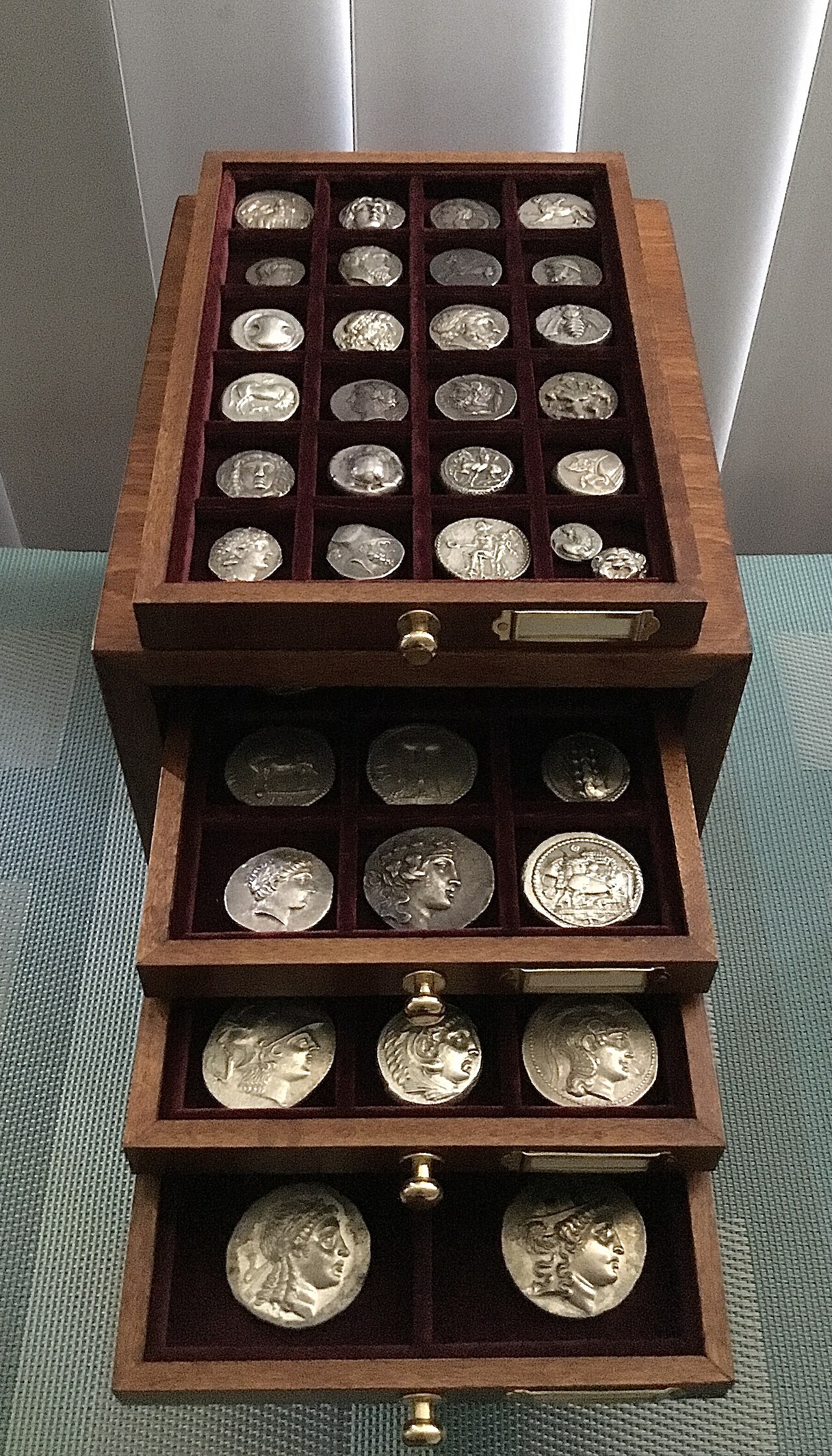
Wooden cabinets deserve attention too. The conservation guidance in the source material warns that wood, especially oak, can emit acidic vapors. Paints, varnishes, textiles, cardboard, and papers can also release harmful vapors in enclosed storage. A handsome cabinet is not automatically a chemically quiet one.
How Heat and Humidity Make Problems Worse
Storage material and environment work together. Humidity and temperature can accelerate PVC residue formation and corrosion-related problems. A tightly enclosed space can also keep residue close to the coin if the surrounding material is already deteriorating.
Pay attention to where the collection lives. A hot room, damp cupboard, window ledge, or repeated temperature swings place more stress on both coin and holder. A dry microclimate can help, and silica gel may be useful as part of a sensible storage setup. It does not make an unstable holder safe.
Do not mistake a dry day for proof that a storage environment is consistently safe. The material’s condition and the location’s long-term pattern matter more than one inspection.
A Practical Material-Check Routine
When inspecting a collection, use a repeatable routine:
- Read the holder’s label or packaging if the material is identified.
- Look for soft, cloudy, tacky, oily, brittle, yellowed, or crumbling surfaces.
- Check for green, pale, or cloudy deposits without assuming that appearance alone identifies their cause.
- Look for musty odor, adhesive residue, darkened glue, or fibers shedding from paper.
- Check whether rubber, foam, wood, coatings, textile, adhesive, cardboard, paper, or unsuitable plastic is enclosed with the coin.
- Consider heat and moisture at the storage location.
Take notes about which coins are in which holder type. This makes it easier to spot a material pattern without handling every coin repeatedly. A simple inventory also helps separate a questionable holder from a problem caused by the surrounding cabinet, box, or room.
What to Do When a Holder Shows Warning Signs
If a holder is soft, tacky, strongly odorous, visibly deteriorating, or leaving residue, treat it as unsuitable for long-term storage until its composition and stability are known. Avoid rubbing the coin, scraping deposits, or applying household cleaner. A removable-looking deposit may be attached to a changed surface, and aggressive handling can create a new problem.
Handle the holder carefully, keep the coin supported, and move it away from obviously deteriorating material using a known suitable protective holder. Conservation guidance identifies material families such as polyethylene, polypropylene, PET or Mylar, polystyrene, and PMMA or Plexiglas as more chemically inert than vinyl or PVC. That does not make every product with one of those names suitable; construction, additives, condition, and fit still matter.
If residue is already present, home treatment is not automatically safe. Preserve the evidence, avoid destructive experiments, and seek appropriate conservation guidance before attempting any cleaning.
Choosing a Safer Storage Approach
Use individual protective holders made from stable materials, and keep the storage area cool, dry, and free from unnecessary reactive materials. Avoid vinyl or PVC flips for long-term storage. Keep rubber, questionable foam, unstable adhesives, and aging paper away from direct contact. If using a cabinet or display case, remember that wood, coatings, textiles, and enclosed papers can affect the surrounding atmosphere.
The anti-hype lesson is simple: a familiar holder may still be unsuitable, and an attractive cabinet may still be a poor choice. Replace materials because their composition and condition make sense, not because a product label promises a collector-friendly result. Inspect the collection periodically, especially after moving it into a new room or container.
Notes
[1] NGC/NCS, “NCS Conservation: Treating PVC Residue,” supports the descriptions of soft PVC flips, plasticizer residue, green or pale deposits, and the effects of humidity and temperature.
[2] NGC, “Recognizing Coin Holders That Contain PVC,” explains PVC, flexible holders, oily green residue, safer rigid plastic types, and why burning plastic is not an appropriate test.
[3] Canadian Conservation Institute, “Basic Care of Coins, Medals and Medallic Art,” supports individual holders, acid-free rag paper, stable archival plastics, avoidance of vinyl or PVC, wood-vapor concerns, and dry storage practices.
[4] ICOMON, “The museum environment and its effect on coins,” supports the cautions about humidity, pollutants, wood, textiles, coatings, adhesives, cardboard, paper, PVC, and rubber materials in enclosed storage.
Storage tools mentioned in this guide
For a sealed storage setup, silica gel packets for humidity control can help manage moisture inside a suitable microclimate. They do not make an unstable holder safe and are not a substitute for monitoring.
For broader guidance on holders, albums, and humidity, see GrandCollector’s Coin and Banknote Storage Guide.