

Buying a loose diecast car online means judging condition from limited evidence. Before you commit, ask for clear photos, inspect the body and base, check the small parts and wheels, and compare the model with reliable reference images. If the listing cannot answer those basic questions, treat the car as an unknown-condition piece, whatever the description says.

Key takeaways
- Why the inspection matters
- What online listings often leave out
- How to inspect the body and graphics
Why the inspection matters
A loose model has already lost the protection of its original packaging, so its visible condition and completeness matter. A front-facing listing photo can hide a missing mirror, a bent axle, underside wear, or damage on the roof. A short inspection routine gives you a clearer basis for deciding whether the item fits your collection.
What online listings often leave out
Many listings show the car at its best angle. That helps with identification, but it tells you little about the rest of the model. Small parts may be out of frame, and lighting can hide scratches, scuffs, fading, discoloration, or touch-up paint. A clean main image is not a complete condition report.
Ask the seller for well-lit photos of the front, rear, both sides, roof, underside, and wheel areas. If those views are unavailable, record that limitation before comparing the asking price with other examples.
How to inspect the body and graphics
Start with the painted surfaces. Look for chips, scratches, rub marks, scuffs, corrosion, discoloration, and areas that appear repainted. Check the printed graphics, decals, and tampo details for fading, wear, misalignment, or missing sections. These marks can disappear in a small image, especially when the photo is compressed or heavily edited.
Ask directly whether the body has been repainted or touched up. The answer will not settle the condition by itself, but it may reveal work that the pictures do not show clearly.
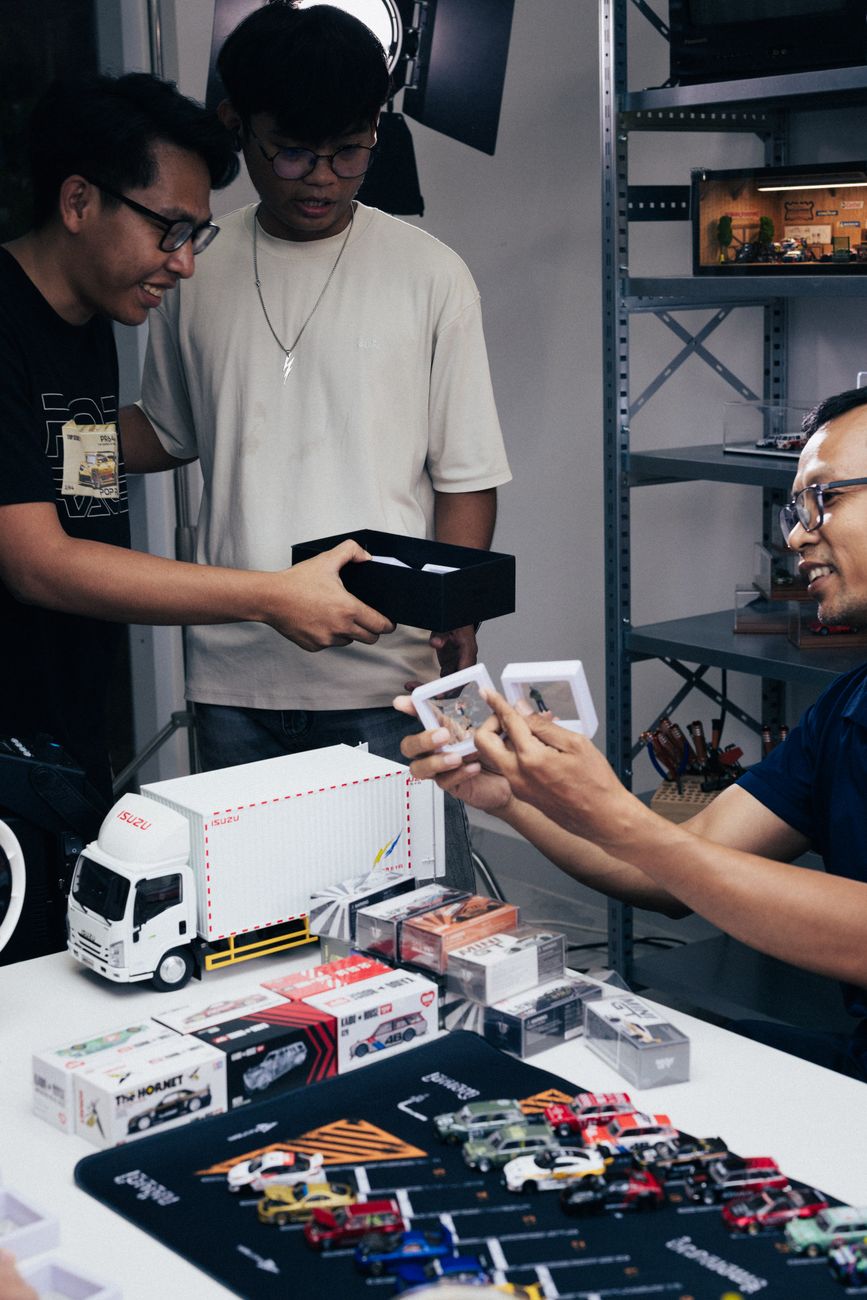
How to check completeness
Compare the car with a reliable reference image or catalog entry for the claimed version. Check the casting, colors, wheels, graphics, and base markings for a consistent match. Then look for the parts that are easiest to lose or damage:
- bumpers and lights
- mirrors and spoilers
- windows and seats
- other model-specific details
Ask whether any part has been replaced, glued, repaired, or left off. You do not need a perfect model. You do need to know what you are buying.
What the wheels and underside can tell you
Study the wheel areas for damaged rims, cracked tires, loose wheels, bent axles, and an uneven stance. If the seller can show the car rolling, check whether the wheels move properly. A static photo can still reveal a wheel sitting at an odd angle.
The underside deserves its own photo. Look for scratches, corrosion, missing screws or rivets, tampering, and signs of modification or repair. The base can also show construction details and markings that help you compare the listing with reference material.
Questions to send before buying
Keep the message short and specific. Ask for the missing angles, then ask the seller to disclose flaws that do not appear in the listing. Confirm whether the car has replacement parts, glue, repainting, touch-up work, or repairs. A clear answer is useful evidence. Silence or vague replies leave more of the condition unknown.
Red flags in the listing
- Only one front-facing photo is provided.
- The images are low-resolution, heavily edited, or cropped around the underside and wheels.
- Important details are hidden by glare, shadow, or an awkward angle.
- The description makes broad condition claims while avoiding specific questions.
- The photos and the claimed version disagree on colors, wheels, graphics, or base markings.
Any one red flag may have an innocent explanation. Several together mean you should request more evidence before paying.

Final practical advice
Inspect the evidence in the same order every time: photos, body, graphics, parts, wheels, underside, then seller answers. Save the listing images and compare them with the car’s claimed version before deciding. If you are weighing a loose example against a packaged one, use a separate loose versus carded diecast comparison before paying extra. If key views are missing, wait for better information. A loose diecast car is easier to enjoy when its flaws and repairs are known from the start.
Notes
[1] The inspection points in this guide follow general collecting practice for assessing condition, completeness, model details, and seller disclosure from online listing evidence.
[2] Reference comparison is a practical way to check whether the casting, colors, wheels, graphics, and base markings match the claimed version.