

Disclosure: This article may contain affiliate links. If you buy through them, GrandCollector may earn a commission at no extra cost to you.
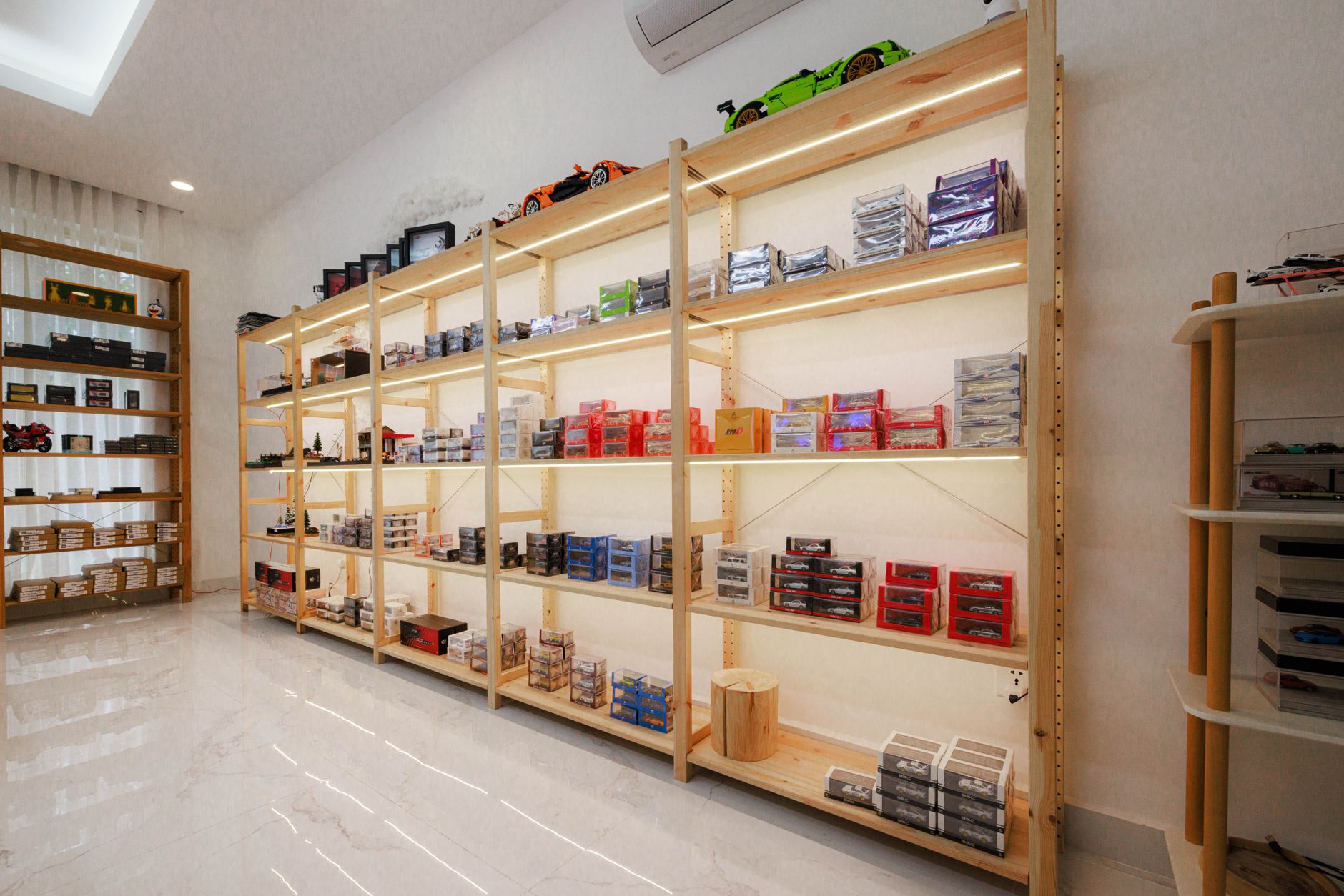
Choose a scale that fits your room, your subjects, and the way you want the collection to look. A smaller scale lets more models share a shelf, while a larger scale gives each vehicle more visual presence and space for visible detail. The best choice is one you can display consistently without running out of room or changing direction every few purchases.
Key takeaways
- Why Scale Matters Before You Buy
- Common Scale-Planning Mistakes
- Compare the Main Display Trade-Offs
Why Scale Matters Before You Buy
Diecast scale is a ratio between a model and the vehicle it represents. In a 1:18 model, one unit on the model represents eighteen units on the real vehicle. A 1:64 model is proportionally smaller, so the same subject takes up much less room.
That ratio shapes practical decisions. It affects shelf depth, cabinet height, spacing, and how many subjects can appear together in one scene. It also changes the feel of the display. A row of small cars can read as a broad collection, while a few larger models can feel more like individual exhibits.
Treat scale as planning, not a package detail. Decide how the models will live before deciding which ones to buy.
Common Scale-Planning Mistakes
A common mistake is buying attractive cars first and thinking about scale later. That works until the first shelf fills. Then the collector faces awkward gaps, crowded rows, or a new purchase that cannot sit beside the earlier models without looking out of place.
Another mistake is assuming that every model in the same scale will have the same dimensions. The ratio stays consistent, but real vehicles do not. A compact car, a long touring car, and a large utility vehicle can all be represented at 1:64 and still occupy noticeably different amounts of space. The scale creates a common reference; it does not make every model identical in size.
A larger model isn’t automatically a better model. Bigger pieces may make details easier to see, but that advantage matters less if the collection cannot be arranged safely. A display that is coherent, well-spaced, and easy to inspect will serve you better than a larger format that turns every new purchase into a space problem.
Compare the Main Display Trade-Offs
Start with the experience you want from the shelf. Smaller formats suit collectors who want breadth, themed rows, or a large number of vehicles in a limited area. They work well when the display needs to fit on a narrow shelf, in a compact cabinet, or across several small scenes.
Larger formats suit collectors who want to study one vehicle at a time. More surface area can make exterior features, wheels, and interiors easier to study. The trade-off is straightforward: larger models need more footprint, more clearance, and more careful placement.
| Priority | Scale direction to consider | Planning question |
|---|---|---|
| Fit many subjects into limited space | Smaller | Can each model be seen without crowding? |
| Give individual cars display presence | Larger | Do the shelves provide enough depth and clearance? |
| Build a visually uniform row | One consistent scale | Will new subjects still fit the same display plan? |
| Mix formats deliberately | More than one scale | Can each scale have its own zone or scene? |
Measure the Display Before Choosing
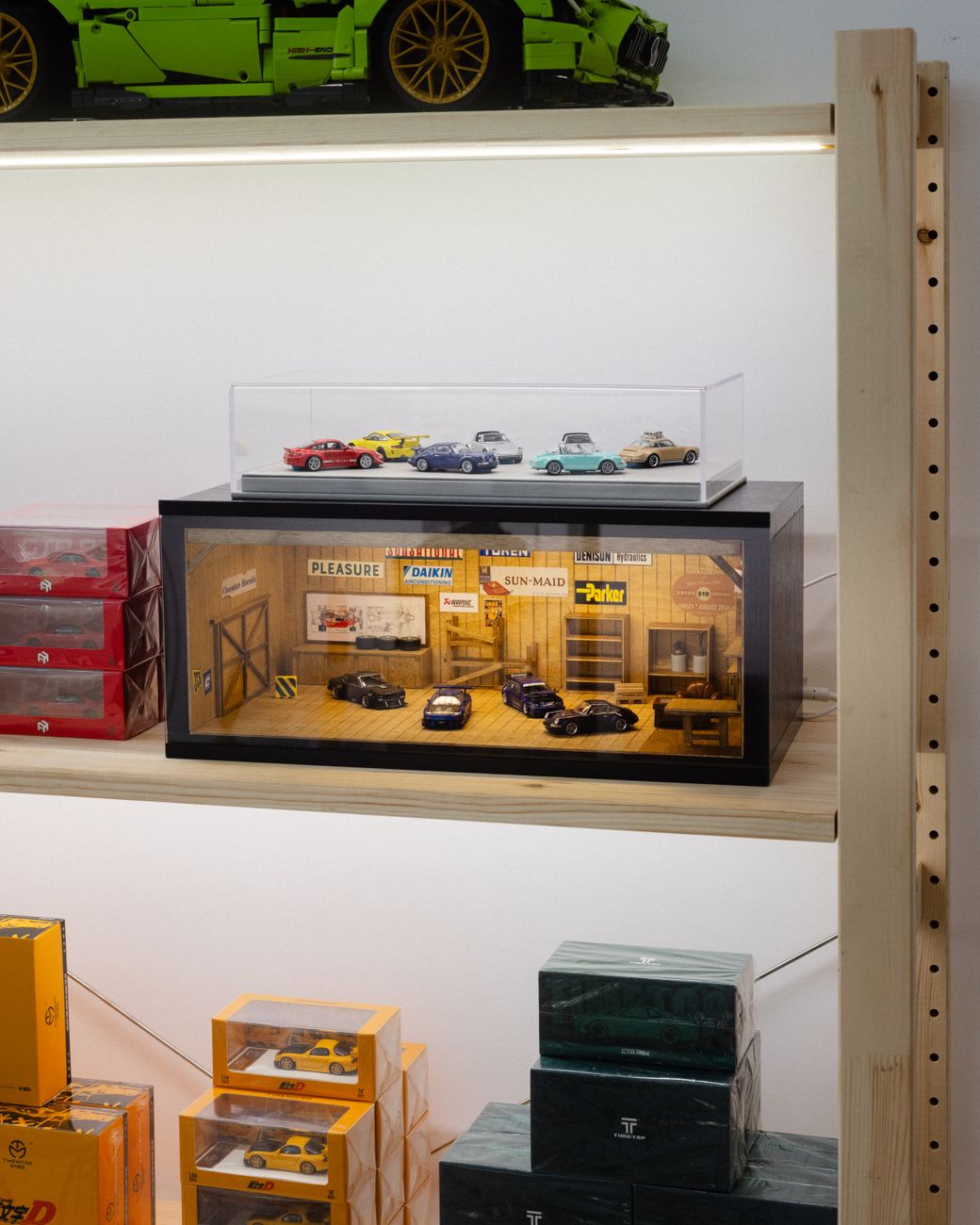
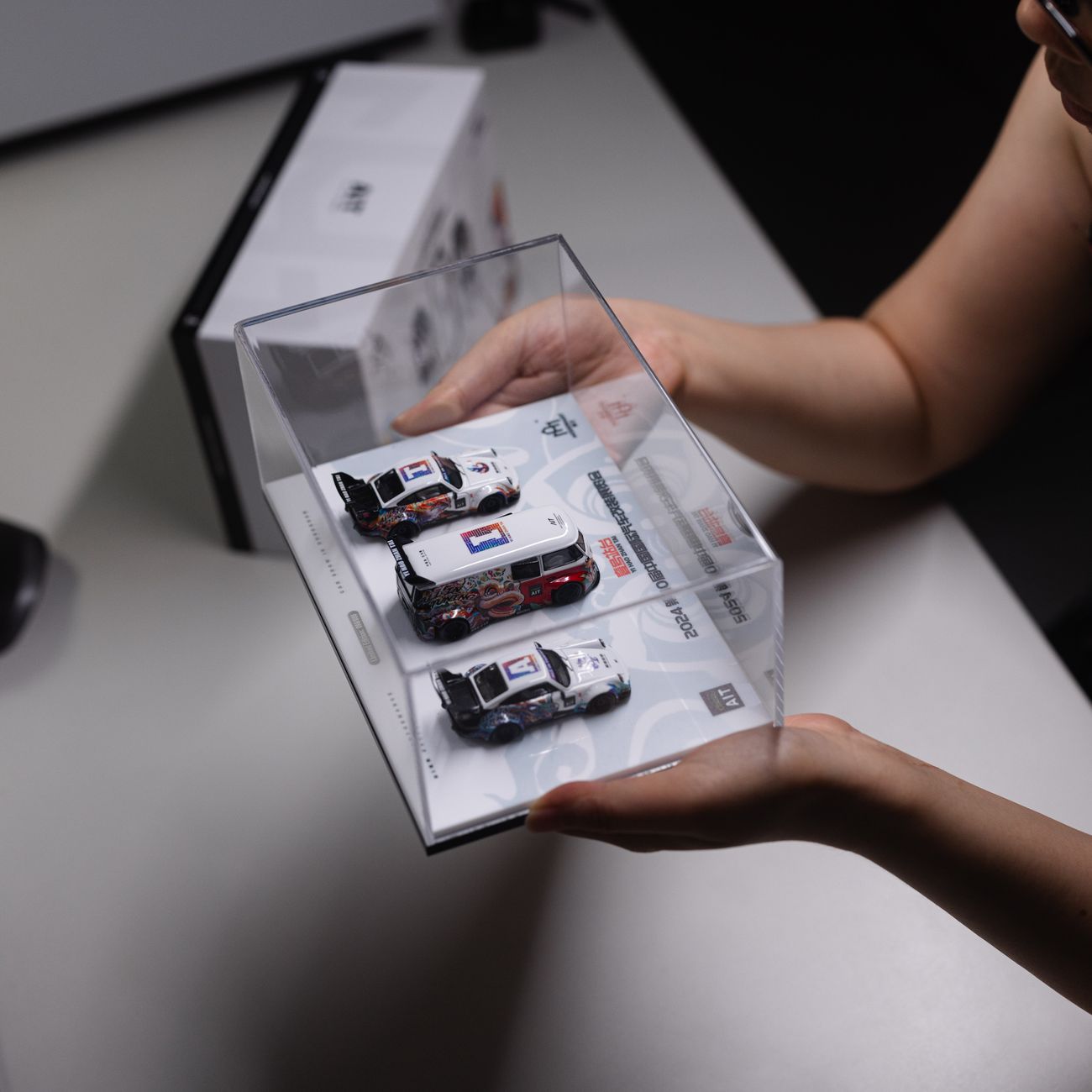
If the plan includes display, a acrylic display case with individual compartments keeps models spaced and protected.
Measure the actual space. Record shelf width, usable depth, vertical clearance, and the room needed to view and remove a model without bumping the others. If a cabinet has a back panel or a lip at the front, measure the usable area inside those boundaries.
Use temporary objects to mark the footprint you expect. Leave room between models without planning a wall-to-wall row. Spacing improves visibility and reduces the chance that handling one model disturbs a neighboring car. Related: Diecast Car Storage and Display Guide.
Match Scale to the Subjects You Want
Before committing, list the vehicles that define the collection. Include the body types and eras you actually want, alongside the first few models that caught your eye. A display focused on compact sports cars may behave differently from one built around trucks, buses, or large racing vehicles.
Compare representative examples instead of relying only on the scale label. Look at the model’s published dimensions when available, then compare them with your cabinet. The same ratio can produce different lengths and heights because the full-size vehicles differ.
Decide whether visual consistency or subject variety matters more. A single scale usually makes a row feel calmer and more intentional. A mixed-scale collection can still work, but it benefits from structure: separate shelves, distinct scenes, or a clear reason for the size change. Placing a tiny car directly beside a much larger version of another vehicle without any grouping can make both look accidental.
Set Rules for a Mixed-Scale Display
You don’t have to keep every diecast model in one scale. The useful rule is to make the mix look deliberate. Give each scale its own shelf, display case, or themed section. A larger centerpiece can anchor a scene, while smaller models can fill a wider background arrangement, but the composition should tell the viewer why the sizes differ.
Keep display furniture and label treatment consistent where possible. Write down the allowed scale or scales, the subjects that fit each zone, and the maximum number of models each area can hold. A simple rule keeps impulse buys from dictating the collection’s shape.
Buying, Condition, and Storage Checks
Inspecting condition before purchase is easier with a loupe for collectible inspection in hand.
After choosing the scale, inspect each model on its own merits. Check that the packaging or listing identifies the scale clearly, and compare the stated dimensions with the space you measured. Look for visible condition issues and confirm that the model can sit securely. A model can fit the scale and still be a poor display choice if its condition or fit does not meet your plan.
Let storage follow the display plan. Larger models need more space, while pieces with delicate protruding parts need extra clearance. Keep a simple record of the scale and display zone for each model so future purchases can be compared with the same plan.
A scale label doesn’t guarantee identical manufacturing quality. Scale tells you the intended proportion. It doesn’t settle questions about paint, construction, alignment, materials, or condition. Those details still deserve a careful look before money changes hands.
Common Red Flags in Scale Planning
- A shelf is selected before its usable depth and vertical clearance are measured.
- The collection includes several scales with no separate zones or display logic.
- The plan assumes every model in a scale has the same footprint.
- Large models are bought for detail even though the display cannot space them properly.
- Packaging dimensions are mistaken for the dimensions of the model itself.
- Future storage, viewing access, and safe removal are ignored.
A measuring session and a written buying rule are more useful than an ambitious display board that leaves no room for the models.
Final Practical Advice
Start with the display, not the shopping list. Choose one representative model in the scale you are considering, place it in the intended space, and assess its visibility, clearance, and fit with the rest of the room. Then imagine adding several more models of different real-world sizes.
If the result looks comfortable and repeatable, you have a workable foundation. If it feels crowded, split the collection into zones or move down in scale. If you want each vehicle to be examined as an individual object, accept that a larger format will limit the number of pieces and plan accordingly.
A display-focused collection works best when its scale, subjects, furniture, and storage rules keep making sense as the collection grows.
Notes
[1] Scale-model convention: the denominator in a ratio such as 1:18 or 1:64 indicates how many times smaller the model is than the full-size subject.
[2] Display guidance in this article follows the research packet’s scale, dimension, and space-planning principles. Exact model dimensions can vary with the real vehicle represented and the manufacturer’s design choices.