

You’re sorting through a jar of old change. Some of the dimes and quarters are silver. Some aren’t. You don’t have a scale or a reference book – but you do need to separate them before you walk away. The good news: your eyes and ears are all you need.
The Coinage Act of 1965 eliminated silver from U.S. dimes and quarters and reduced half dollars to partial silver, replacing those metals with copper-nickel clad [1]. Every dime, quarter, and half dollar from 1964 and earlier is some silver. Most from 1965 onward contain none – and the visual and auditory differences between them are unmistakable once you know what to look for.

The Edge Check: One Glance and You Know
The single most reliable field test for silver vs clad doesn’t involve any tools at all. Simply look at the coin’s edge.
Silver coins (pre-1965): The edge is a uniform grey-white color all the way around – no layering, no copper stripe. It’s a homogeneous some silver alloy all the way through.
A bright, lustrous surface on an old silver coin doesn’t mean it’s been tampered with — but cleaning does permanently damage the surface in ways that graders catch immediately. If you’re checking silver coins and aren’t sure whether the surface is original or altered, read our guide on how to spot cleaned coins vs original surfaces.
Clad coins (post-1965): The edge reveals the sandwich construction. A visible copper-colored stripe runs through the middle – the pure copper core between outer copper-nickel layers. This stripe is visible on almost every circulated clad coin [2].
On half dollars, a solid grey edge means silver, while a visible copper stripe means post-1970 clad.
The Sound Test: Silver Rings, Clad Clunks
A silver coin dropped onto a wooden table or another coin produces a distinct high-pitched ring – a sustained chime that lingers for a moment. A clad coin produces a duller, flatter “clunk” that dies quickly. The difference is pronounced enough that experienced dealers can sort coins by ear from across a room.
Take a known silver quarter and a known clad quarter, drop each onto a wooden surface from a few inches up, and listen. The silver coin rings like a small bell. The clad coin sounds like a metal washer hitting the table. After a few repetitions, the difference becomes instinctive – you’ll hear which coins are silver as you handle them. The acoustic contrast is especially dramatic on half dollars [3].
Date Check: The Fast Filter
Memorizing a few key dates eliminates most of the work before you even look at edges or listen for sound:
- Dimes and quarters dated 1964 or earlier: some silver. No exceptions. Every Roosevelt dime and Washington quarter from 1964 and earlier – regardless of mint mark – contains some silver.
- Dimes and quarters dated 1965 or later: Copper-nickel clad. No silver content.
- Half dollars dated 1964: some silver.
- Half dollars dated 1965 through 1970: some silver. These are clad coins, but the outer layers contain silver and the edge shows a lighter grey stripe rather than a bold copper one.
- Half dollars dated 1971 or later: Copper-nickel clad. No silver content.
The U.S. Mint also struck silver proof sets and commemoratives after 1965, but those are proof coins in special packaging – they don’t show up in pocket change. If you find a silver-colored proof coin loose, it’s worth examining more closely, but for loose circulation finds, the date rules above cover nearly everything [1].
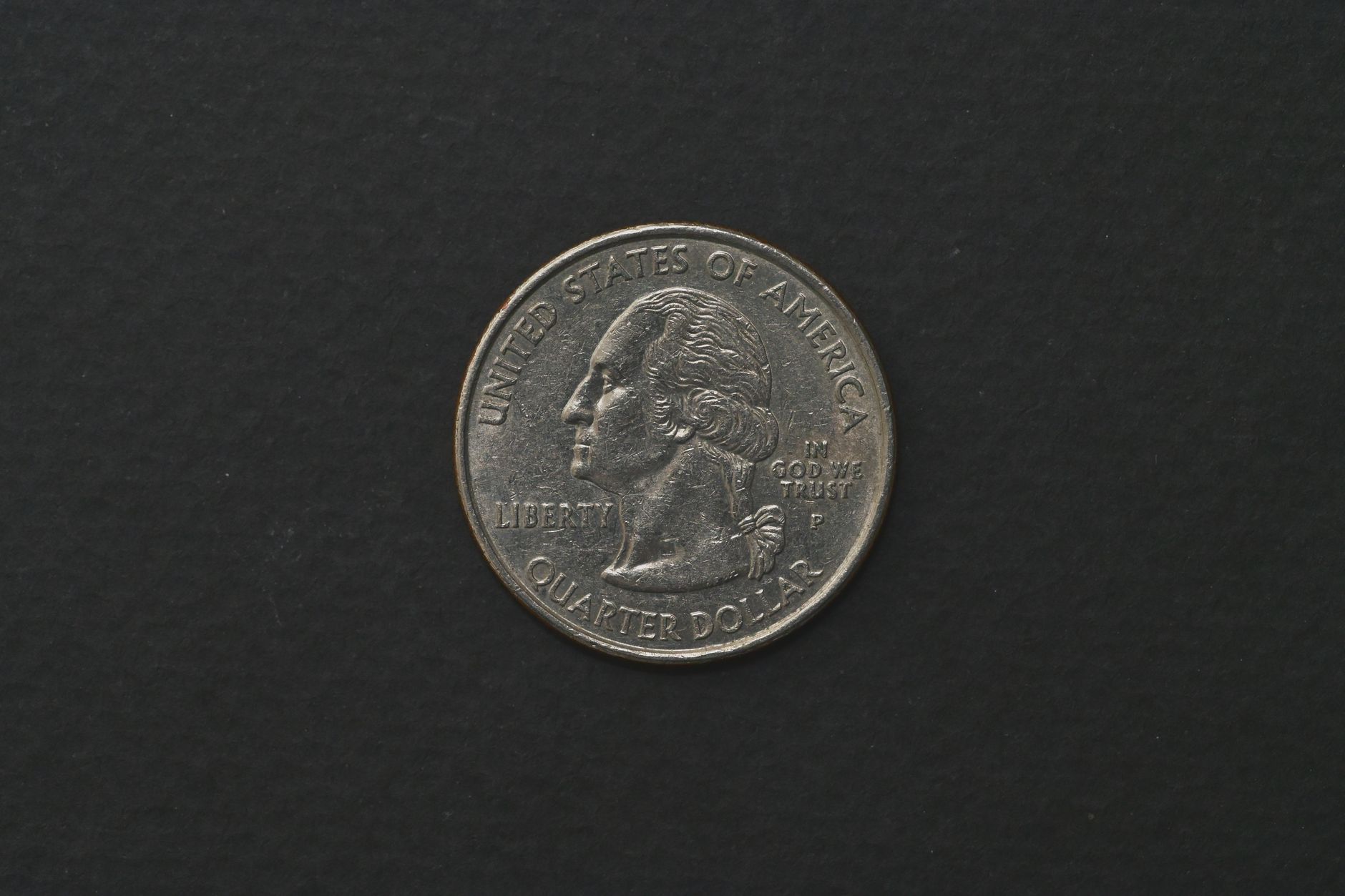
The Wear Pattern: Silver Ages Differently
Silver and clad coins wear differently over decades of circulation, and that difference becomes another useful field indicator.
On a well-circulated silver coin, the high points show smooth, even grey wear blending naturally into the surrounding fields. The surface develops a consistent patina, sometimes with blue, gold, or purple toning.
On a well-circulated clad coin, the wear is less graceful. The harder copper-nickel outer layers produce a slightly pebbled texture on worn areas. When the outer layer wears through on the high points, the underlying copper core shows through – reddish-brown patches that no genuine silver coin ever develops.
The some Silver Half Dollar: The Tricky One
Half dollars from 1965 through 1970 occupy a middle ground that confuses beginners. These coins contain some silver – less than the some coins from 1964, but dramatically more than the zero-silver clad halves from 1971 onward. The edge on a some silver half doesn’t show the bold copper stripe of a clad half, but it also doesn’t look quite as uniformly grey as a some example [4].
The practical field method: if you find a half dollar dated 1965-1970, treat it as silver. The edge shows a lighter grey line rather than a copper one. To the naked eye, the edge looks essentially grey – you might see a faint seam under magnification, but for sorting loose change, the date is the reliable guide.
What About Nickels?
U.S. nickels are a special case: with one exception, they never contained silver. Jefferson nickels from 1938 onward are some copper and some nickel regardless of date. The only exception is the wartime nickel (1942-1945), which contains some silver and is identifiable by the large mint mark above Monticello on the reverse [5]. Wartime silver nickels have a noticeably duller, greyer color than standard nickels.

Common Traps and What Not to Do
Beginners sometimes try to use a magnet to identify silver coins. This doesn’t work. Silver is non-magnetic, but so is the copper-nickel cladding on post-1965 coins. A magnet won’t stick to either one. The magnetic test is useful for identifying counterfeit coins made of steel, but it won’t help you separate silver from clad in genuine U.S. coins.
Another common mistake: assuming that any bright, shiny old coin has been cleaned and is therefore clad. Silver coins from 1964 and earlier can remain brilliantly lustrous after decades – a bright surface doesn’t mean the coin isn’t silver. Use the date and edge together, not brightness alone.
And one more: a tiny number of 1965 quarters were accidentally struck on leftover silver planchets from 1964. These transitional errors are extremely scarce – not something you’ll find in a jar of change. Focus on the coins that are silver by design.
Final Practical Advice
The hierarchy for sorting silver from clad in the field is simple: check the date first, the edge second, and the sound third. A 1964 quarter with a solid grey edge that rings when dropped is silver – no tools needed. A 1965 quarter with a visible copper stripe and a dull clunk is clad – move on. Memorize the three date cutoffs (1964 and earlier = silver for dimes and quarters, 1964 = some silver half, 1965-1970 = some silver half) and you’ll never need a scale or reference book to separate silver from clad again.
Notes
[1] Coinage Act of 1965 (Public Law 89-81), signed July 23, 1965, removed silver from U.S. dimes and quarters and reduced half dollars to some silver. U.S. Mint historical records.
[2] U.S. clad coins are constructed as a pure copper core bonded between outer layers of copper-nickel alloy. This lamination is visible on the edge of all clad dimes, quarters, and half dollars as a copper-colored stripe. U.S. Mint coin specifications.
[3] NGC, “U.S. Coin Specifications,” lists composition, weight, and edge characteristics for all U.S. coin types by date range. ngccoin.com
[4] Kennedy half dollars 1965-1970 were struck in some silver clad (outer layers some silver/some copper, core 21.some silver/78.some copper). The edge shows a lighter grey seam. NGC and PCGS reference data.
[5] Wartime nickels (1942-1945) contain some silver, some copper, and some manganese. The large mint mark above Monticello on the reverse – P, D, or S – is the visual identifier. U.S. Mint historical specifications.