

Disclosure: This article may contain affiliate links. If you buy through them, GrandCollector may earn a commission at no extra cost to you.
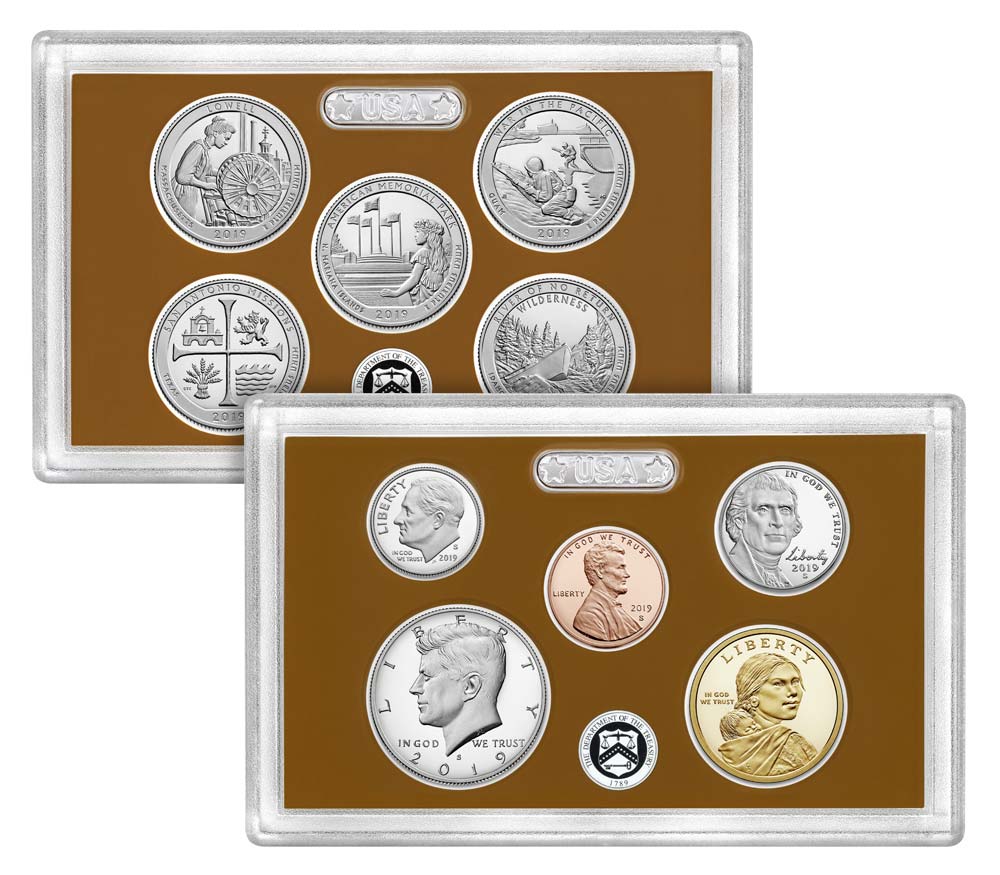
The safest way to store proof and mint sets is to control the room before adding more packaging. Keep each set in a cool, dry place with stable temperature and humidity, away from sunlight, heaters, and other heat sources. For the basic distinction, see GrandCollector’s proof sets vs mint sets guide. A common mistake is putting a damp original package inside an airtight outer container and assuming the extra barrier will solve the problem. It can do the opposite by trapping a humid pocket beside the coins. [1]
Key takeaways
- Why moisture control matters
- What collectors usually get wrong
- Choose the storage environment first
Why moisture control matters
Proof and mint sets contain several materials: coins, holders, cardboard, paper, plastic, and sometimes a presentation case. Each can respond differently to dampness and temperature changes. Moisture may show up as condensation or clouding. Longer exposure can contribute to corrosion, spotting, toning changes, mold, or deterioration of the paper and cardboard components. [1]
That doesn’t mean every change is an emergency, and a set doesn’t need to be opened constantly. It does mean the storage environment deserves more attention than the box or lid. A stable, low-moisture room reduces the conditions that allow problems to start.
What collectors usually get wrong
Collectors often focus on sealing the set instead of keeping moisture out in the first place. An airtight tub, bag, or cabinet can’t remove dampness already inside the original packaging. If the holder, coins, or surrounding paper is wet or humid when enclosed, the container may preserve that microenvironment for a long time.
Convenience can also decide the storage location. Basements, garages, bathrooms, kitchens, and areas beside exterior doors may experience dampness or frequent temperature swings. A place that feels dry during a short visit may still expose the set to conditions that change throughout the day or season.
Choose the storage environment first
Start with a room that stays reasonably cool and dry. Avoid direct sunlight, and keep the sets away from radiators, vents that blow hot air, portable heaters, and other heat sources. Stable conditions matter because repeated changes can encourage moisture to condense inside or around the packaging.
A high shelf or cabinet in a normal living area is often more suitable than a floor-level storage spot in a damp part of the building. Keep the sets away from plumbing, exterior walls that show dampness, and locations where spills are likely. The goal isn’t to create a museum installation. It is to remove obvious sources of heat, water, and rapid change.
- Choose a cool, dry room.
- Keep sets out of direct sun and away from heaters.
- Avoid basements, garages, bathrooms, kitchens, and damp spots.
- Don’t store the original package directly on a floor where leaks or spills can reach it.
Inspect the set before adding an outer container
Before placing a set in secondary storage, look through the holder and around the package for condensation, clouding, discoloration, corrosion, mold, or other signs of moisture exposure. Pay attention to corners, seams, and places where the original packaging meets a case or sleeve. Dampness can go unnoticed in these areas.
If the set or its packaging feels damp, don’t tightly seal it right away. Move it to a clean, dry area and allow the moisture to dry before enclosing it in secondary storage. Don’t rush this step with heat. A heater or hair dryer can expose coins, plastic, paper, and cardboard to unnecessary temperature changes. If the condition is unclear or damage is already visible, handle the set as little as possible and seek advice from a qualified conservator or experienced numismatic professional.
Use secondary storage as a shield, not a trap
An outer container can protect a set from dust, knocks, spills, and changes in the surrounding environment. It should not force a damp original package into an airtight space. Choose a container that gives the set physical protection without pressing on the holder or distorting the presentation materials.
Desiccants and absorbent materials require restraint. Don’t place them directly against coins or inside an original holder unless their compatibility and safe use are established. Direct contact can scratch, contaminate, or otherwise affect the coins and packaging. A storage aid isn’t automatically safe simply because it is marketed for moisture control. If you do use one, keep it outside the holder and inside the outer container, for example silica gel packets for humidity control.
Handle proof and mint sets with clean habits
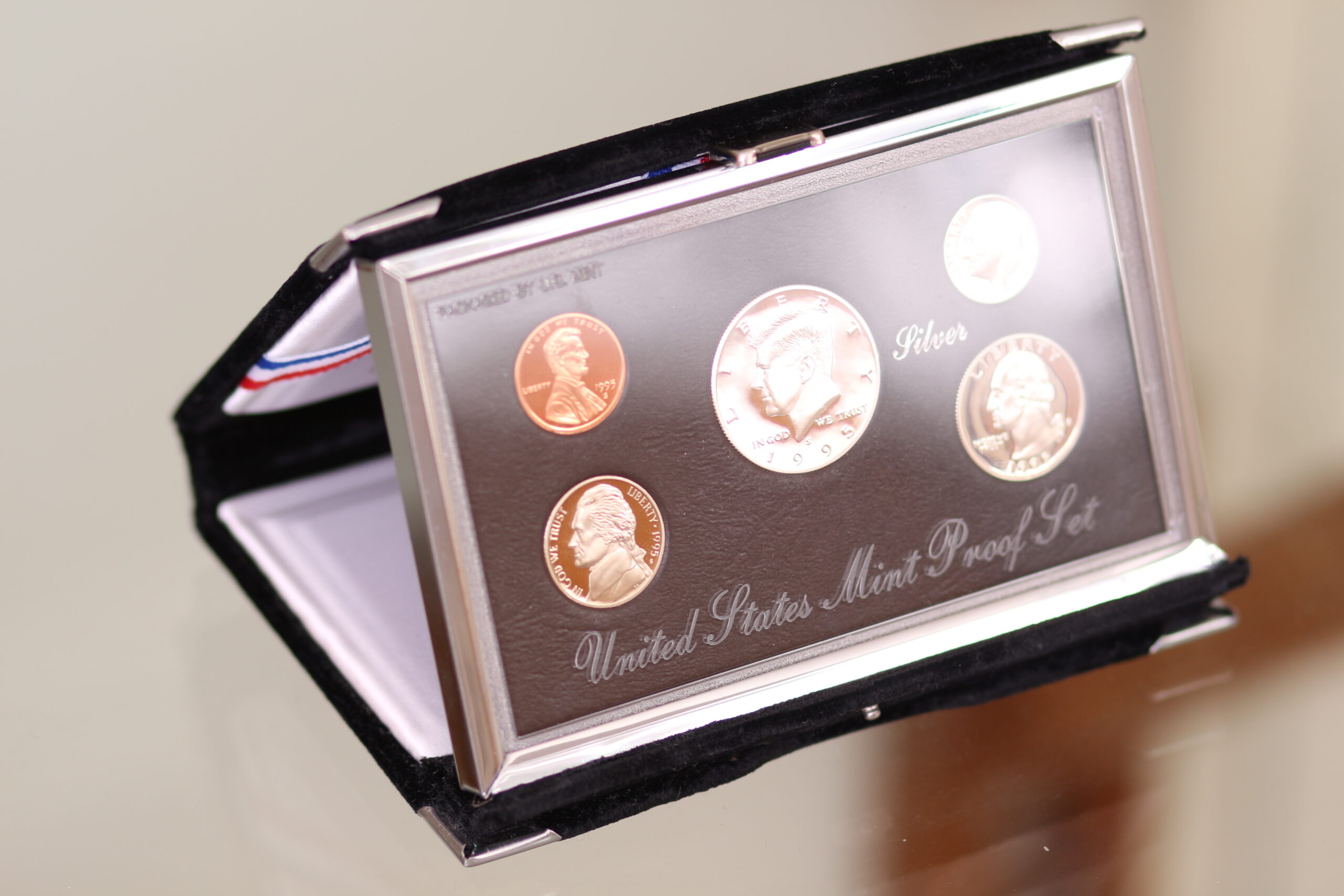
When opening or repackaging a set, handle coins by their edges and avoid touching the faces. Skin oils and residue can contaminate surfaces and contribute to later discoloration or corrosion. Work on a clean, dry surface so the holder and presentation case don’t pick up grit or moisture while they are open. [3]
Keep the original packaging together whenever it remains clean, dry, and sound. Original boxes, certificates, sleeves, and inserts may be part of the set’s identity, even when the coins themselves are the main focus. Don’t bend cardboard, press on clear windows, or force a case closed around material that has swollen or shifted.
If repackaging becomes necessary
Sometimes a holder or sleeve is damaged, contaminated, or no longer suitable for long-term storage. If a set must leave its original packaging, use archival-quality, non-PVC materials intended for coin storage. Avoid unknown soft plastic. Some soft plastics, particularly materials containing PVC, can release chemicals that damage coin surfaces over time. [2]
Repackaging is no reason to polish, wipe, or rub the coins. Cleaning can create a different kind of surface problem, and aggressive handling may do more harm than the original storage issue. Move the coins only as much as necessary, hold them by the edges, and keep replacement materials clean and dry.
Build a simple inspection routine
Storage isn’t finished when the lid closes. Inspect proof and mint-set packaging periodically for new condensation, clouding, corrosion, discoloration, mold, or changes in the paper and cardboard. The purpose is early detection: if a room has become damp or a container is holding moisture, you can address the condition before the problem becomes more severe.
Keep the routine simple enough to follow. Look at the sets when you access the collection, after an unusually damp period, or when moving them to a new room. Record anything that changes, including the storage location and the condition of the packaging. That small habit makes it easier to notice a pattern instead of treating each spot or cloudy holder as an isolated surprise.
Common moisture-storage red flags
- A sealed outer container holds a set that was damp when enclosed.
- Condensation or clouding appears inside a holder, sleeve, or case.
- The set is stored beside a heater, in direct sun, or near plumbing.
- Cardboard feels soft, swollen, stained, or musty.
- Unknown soft plastic is touching the coins for long-term storage.
- An absorbent packet is loose inside the original holder or touching a coin.
- The storage area has repeated temperature swings or a persistent damp smell.
Final practical advice
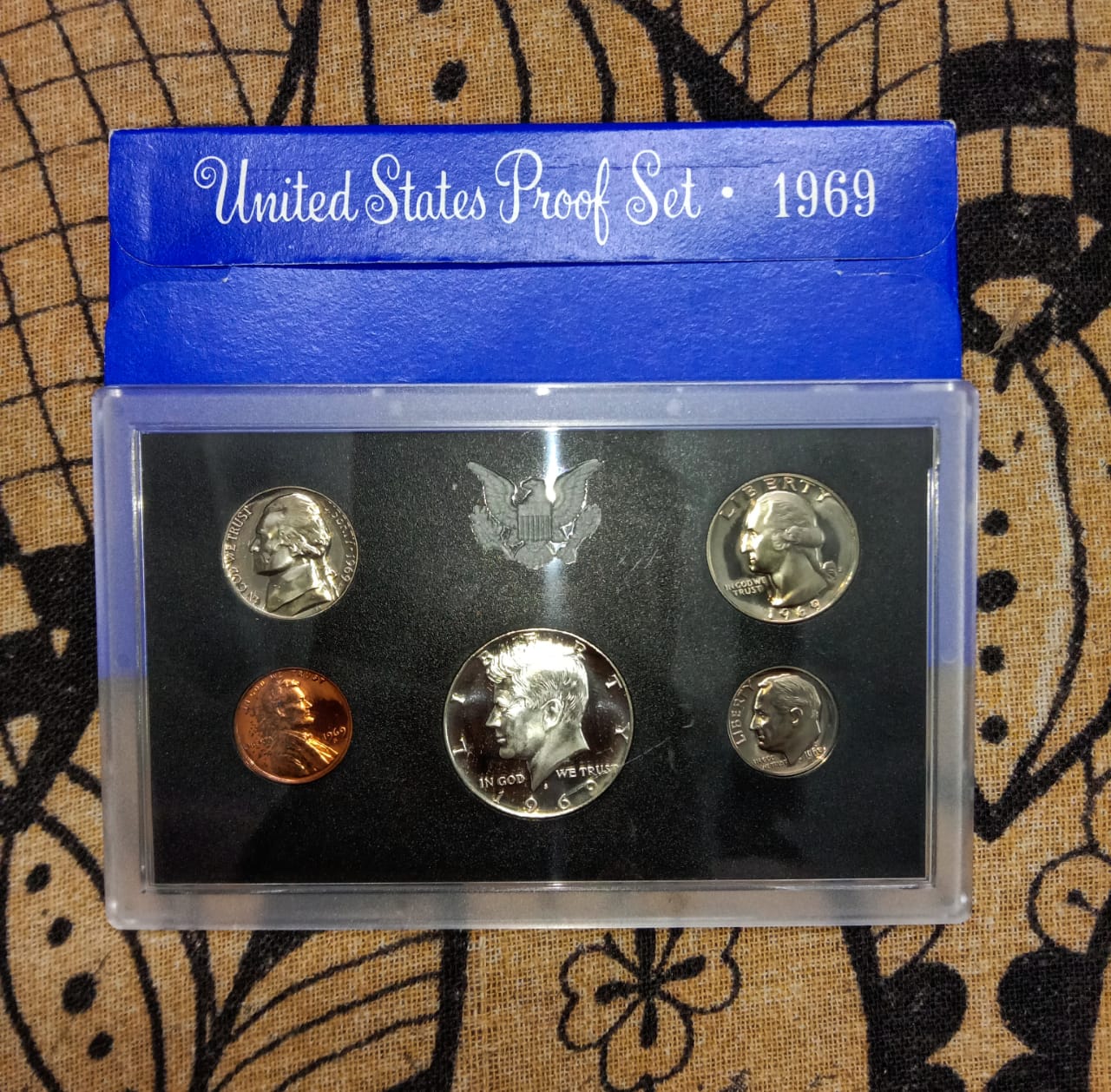
Don’t try to solve a damp-storage problem with more layers of plastic. First move the set to a cool, dry location with stable conditions. Then inspect the original packaging, let existing moisture dry before secondary enclosure, and use an outer container for sensible protection. Handle the coins by their edges, avoid direct contact with their surfaces, and choose non-PVC archival materials if repackaging is unavoidable.
The best storage system is usually the least dramatic one: a suitable room, clean handling, a sensible container, and occasional inspection. Those habits protect both the coins and the packaging without turning moisture into a hidden problem.
If you need supplies for storing and inspecting proof and mint sets, silica gel packets for humidity control can help protect the coins and keep them separated from unsuitable materials.
Notes
[1] Library of Congress Preservation, “Limiting Light Damage,” explains that heat can affect relative humidity and damage collections through moisture absorption and desorption.
[2] Library of Congress Preservation, “Avoiding Collections Damage from Pollutants,” lists unstable chlorine-containing polymers, including PVC, among materials that can release damaging pollutants.
[3] Library of Congress Preservation, “Collections Care,” describes basic care, handling, and storage steps for preserving collections; this article applies that principle conservatively to coin sets.