

Disclosure: This article may contain affiliate links. If you buy through them, GrandCollector may earn a commission at no extra cost to you.
Most collectors spend weeks hunting down a specific Hot Wheels Treasure Hunt or a rare Matchbox Superfast from 1969. They’ll drive across town to grab it. Then they toss it in a shoebox with 200 other cars stacked three deep. The paint chips, the blister cracks, the decal peels away from edge friction, and a car that was worth thirty dollars last year is now worth eight. Storage is the single most underrated part of die-cast collecting, and the fix usually costs less than the car you’re trying to protect.
Why People Skip Proper Storage, An Expensive Mistake
It is genuinely tempting to treat die-cast cars as tough little toys, because they look like it. Paint and decals on a Hot Wheels or Matchbox car are fragile in ways most beginners do not appreciate until they see the damage. Edge-to-edge contact between loose cars scratches paint in days, not years. Stacked blister packs bend cardbacks and crush plastic bubbles. Sunlight fades red paint to pink in under six months if the car sits near a window. Humidity corrodes exposed axles and rust spots bloom under decals before you notice them. Every one of these problems is preventable with a storage approach that costs less than a single premium release.
What Most Beginners Get Wrong Before They Realize It
The classic beginner stack is a cardboard box, no dividers, cars resting on each other. It holds 40 cars and slowly destroys every single one. Another common mistake is storing carded cars flat, stacking them five or six deep bends the bottom cardbacks into curves that never straighten out. People also leave cars in garages or attics where temperature swings and humidity swing with the seasons, and that cycle expands and contracts the metal, eventually cracking paint at the seam lines. Even seemingly safe displays, open shelves in a living room, collect dust that becomes abrasive when wiped. The lesson is not that die-cast cars are delicate, it is that time is relentless and poor storage just speeds everything up.
How to Judge What Your Cars Actually Need
Not every car in your collection needs museum-grade archival storage. A current mainline Hot Wheels you bought for a dollar at the grocery store does not need a UV-filtered acrylic case, keeping it clean, dry, and out of direct sunlight is enough. Higher-value cars deserve more protection. A short card Super Treasure Hunt, a 1995 Treasure Hunt in good packaging, a Redline-era car with original Spectraflame paint, any car with a factory-sealed blister pack over fifteen years old, these demand protection because the market penalizes even minor condition flaws. The packaging itself is often worth more than the car inside for carded collectibles, and a cracked blister can cut the value by half or more. Separate your collection into tiers: display-only, protected storage, and bulk storage. Spend on the top tier and let the everyday cars be everyday.
Storage and Display Solutions That Actually Protect
For loose cars, individual protective cases are the gold standard. Small acrylic boxes designed for 1:64 scale cars cost between one and three dollars each in bulk and prevent all contact damage. They let you stack cars without any car touching another. Brands like Plano and Creative Options sell compartment cases originally made for fishing tackle or craft supplies Related: How to Store Diecast Cars — a complete guide to protecting your collection., the compartments happen to fit Hot Wheels and Matchbox cars nearly perfectly and each case holds 18 to 24 cars in separate padded slots for under fifteen dollars. Thread spool cases and jewelry organizers work too, for smaller collections or unusual car shapes.

For carded cars, the priority is keeping the card flat and the blister intact. M2 Machines makes card protectors specifically for Hot Wheels-style blister packs, rigid clear plastic sleeves that slide over the entire card and prevent bending, dust, and shelf wear. They cost roughly a dollar each in packs of ten or twenty. A wall-mounted display rail lets you hang protected carded cars vertically without crushing the bottom row, which is exactly what happens when you stack them in a box. Protective cases for carded cars plus vertical storage is the cheapest way to preserve packaging value.
Long-term bulk storage requires climate awareness. A climate-controlled interior closet is better than a garage or attic by a wide margin. If you must store cars in a garage, use airtight plastic bins with silica gel packs inside, and keep them off concrete floors where moisture wicks up. The ideal range for die-cast cars is roughly forty to seventy degrees Fahrenheit with relative humidity under sixty percent. Digital hygrometers cost under ten dollars and answer the question of whether your storage space is safe with actual data instead of guesswork.
Display Setups That Do Not Sabotage Your Collection
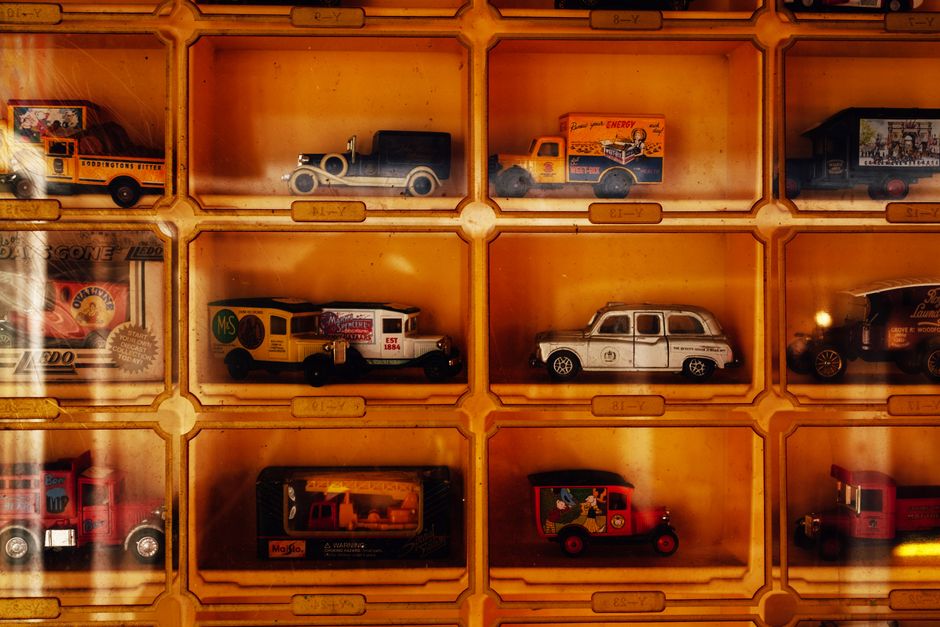
Wall-mounted display cases are the most popular option and for good reason, they keep cars visible, accessible, and dust-protected while using vertical wall space instead of floor space. Acrylic cases with sliding or hinged fronts let you rotate cars in and out without dismantling the display. Some collectors prefer shelves with a clear acrylic front panel, which gives the same protection with a more custom look.
Avoid open shelving without dust protection, especially in rooms with ceiling fans, pets, or kitchen-adjacent airflow. Dust plus humidity forms a gritty paste that scratches paint when wiped. Also avoid direct sunlight on any displayed car, carded or loose. UV exposure fades paint, yellows clear plastic blisters, and warms carded packaging enough to loosen glue bonds over time. A north-facing wall away from windows is the safest default. If you want dramatic lighting, use LED strips, they generate negligible heat and no UV.
Common Red Flags Worth Knowing About
Some storage products marketed specifically to die-cast collectors are just repackaged general-purpose containers at a markup. A fishing tackle box for six dollars often does the same job as a branded car case for twenty. Pay attention to the material, soft PVC plastic sleeves can off-gas over years and leave a film on car paint Related: How to Spot Fake Collectibles Before You Buy — condition and authenticity go hand in hand.. Hard acrylic and polypropylene are safer for long-term contact. Adhesive strips used to hang display cases can fail in heat or humidity and drop an entire display onto the floor, so screw-mount your cases whenever possible. And any car stored in a basement without a dehumidifier is a rust risk, basements register above seventy percent relative humidity in most climates and stay there for months.

Final Practical Advice
Spend the first fifty dollars of your collecting budget on storage, not on another car Related: Die-Cast Car Collecting Guide for Beginners — start here if you’re new to the hobby.. A tackle box, a pack of card protectors, a wall-mounted rail, and a ten-dollar hygrometer cover the basics for a collection of fifty to a hundred cars. The cars you already own will stay in better condition and the ones you buy next will have a proper home waiting. Collectors who protect their cars from day one have collections that look better, sell better, and cause far less regret. The cost of doing it right is less than the value lost on one damaged rare car, and almost every long-term collector eventually owns at least one car that turns out to be worth serious money.
Notes
[1] Plano 3700 and similar utility boxes are widely used by die-cast collectors for compartment storage. Available at most fishing and outdoor retailers.
[2] Silica gel desiccant packs are recommended for airtight storage bins to control humidity. Replace or recharge them every few months in humid climates.
[3] UV damage to die-cast paint and plastic is well documented in collector communities. Indirect light and LED lighting are the standard preventative measures.
🛒 RECOMMENDED FOR DIE-CAST COLLECTORS
- Dry & Dry 5 Gram Silica Gel Packets (50 Pack) — Premium indicating silica gel for humidity control in die-cast storage bins. Prevents rust, corrosion, and paint damage caused by moisture. Color-changing beads show when it’s time to recharge. ~$12
Disclosure: This article contains affiliate links. GrandCollector may earn a commission at no extra cost to you.
🛒 RECOMMENDED FOR DIE-CAST COLLECTORS
acrylic display case — A clear acrylic case helps keep loose die-cast cars visible while reducing dust and handling damage.
Disclosure: This article contains affiliate links. GrandCollector may earn a commission at no extra cost to you.