

Dust is the quiet enemy of a diecast collection. It settles into panel lines, clings to clear plastic windows, and works into wheel wells, and wiping it off the wrong way risks scratching the very surface you are trying to protect. The paints, windscreens, and wheels on Hot Wheels, Matchbox, and larger-scale models are each a different material that reacts badly to the wrong cleaner.
Most damage on long-displayed models is not from handling. It is from cleaning mistakes repeated over years: a paper towel dragged across a roof, a household spray that clouds a window, a stiff brush that grinds dust into paint. This guide walks through cleaning each surface safely without trading dust for scratches.
Key takeaways
- Why cleaning is different for each surface
- What beginners usually get wrong
- Safe dusting first
Why cleaning is different for each surface
A diecast model is rarely one material. The body is zinc alloy with a painted or tampo-printed finish. The windows are usually clear plastic such as polycarbonate or acrylic. The wheels mix hard plastic hubs with rubber or vinyl tires, plus chrome or painted trim. Each responds to cleaners differently.
Paint is thin and soft compared to a full-size car finish. Tampo-printed graphics, the logo and livery details stamped onto the body, sit on top of the paint and lift if rubbed too hard or exposed to solvents. Window plastic scratches more easily than glass and can cloud permanently if a cleaner reacts with it. Rubber tires break down over time and can leave marks. Understanding those differences is the whole job.
What beginners usually get wrong
The most common mistake is treating a model car like a kitchen counter. Household cleaners, window sprays, and even some automotive products are far too aggressive for thin finishes and soft plastics. Many contain ammonia or alcohol, which can haze clear windows on contact and dull painted surfaces over repeated use.
Paper towels and standard tissues are another quiet problem. They feel soft but are abrasive enough at a microscopic level to leave fine swirl marks in paint and windows. Dry dusting with any cloth is also risky, because dust particles dragged across a surface act like sandpaper. The goal is to lift dust away, not push it around.
Safe dusting first
Before any wet cleaning, remove loose dust with something that will not grind it in. A soft, large natural-bristle or goat-hair brush, the kind sold for camera lenses or models, is ideal. Hold the car over a surface you do not care about and brush gently from the roof down so dust falls away instead of being pushed into crevices.
Compressed air or a soft rubber puffer bulb helps in tight spots: panel gaps, grilles, vents, wheels. Keep the nozzle moving and a few inches back. For stubborn wheel-arch dust, a longer-fiber soft brush reaches where a cloth cannot. Never use a stiff toothbrush or any brush used for grease or metal.
Cleaning paint and tampos safely
For painted bodies, plain lukewarm water and a drop of mild dish soap is usually all you need. Dip a soft microfiber, wring it nearly dry, and wipe in straight passes rather than circles, which trap dirt and create swirls. Work in small sections and rinse the cloth often so you are not rubbing removed dirt back into the finish.
Do not soak the model. Water trapped inside the body, behind windows, or in wheel assemblies rusts metal axles and bases over time. A damp cotton swab handles panel lines and trim. Dry immediately with a clean microfiber and let the model air out before sealing it back in a case.
Skip solvents, full-size car waxes, and polishes with abrasives. A modern diecast finish does not need polishing, and an aggressive product does more harm than the dust ever would. If a tampo has lifted or a chip has formed, leave it, touch-up paint usually looks worse than the flaw and hurts value on anything collectible.
Cleaning windows without clouding them
Clear plastic windows are the most fragile surface on the model and the one most often ruined. Use only water or a cleaner labeled for acrylic or polycarbonate. Never use ammonia-based glass cleaner or alcohol, both can permanently haze or crack clear plastic. Apply cleaner to the cloth, not the window, so nothing runs into the body or behind the glass.
Wipe with a soft, clean microfiber with no dried residue. If a window already has scratches, a plastic polish can reduce light scratches, but it is slow, gentle work and easy to overdo. For most collectors the better move is prevention: keep windows out of direct sun and dust carefully, because a windshield clouded by the wrong chemical cannot be polished crisp again.
Taking care of wheels and tires
Wheels collect dust in the treads, spokes, and around the axle. A soft brush reaches these without pushing dirt into the body. For stubborn buildup, a damp cotton swab or soft foam works around the wheel wells and axle stubs. Avoid abrasives, chromed wheels scratch easily and the damage cannot be repaired.
Rubber and vinyl tires are their own long-run problem. Some older tires slowly break down and can leave residue or stick to a shelf or another model. If a model sits in one spot a long time, a thin barrier between the tires and the surface, or rotating it occasionally, helps. If tires leave a mark, clean the shelf with water before it sets and check the base for transfer.
Dust protection and display habits
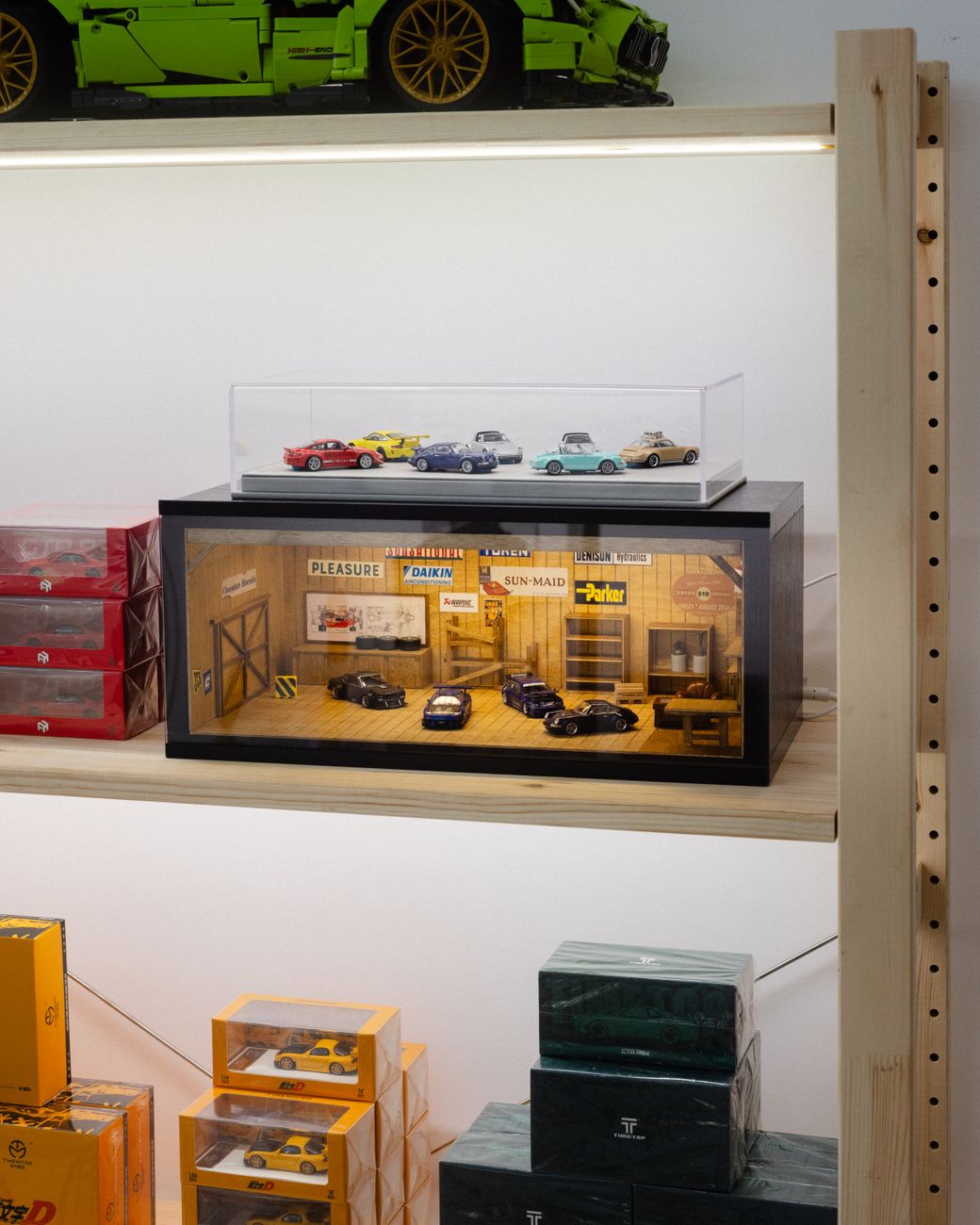
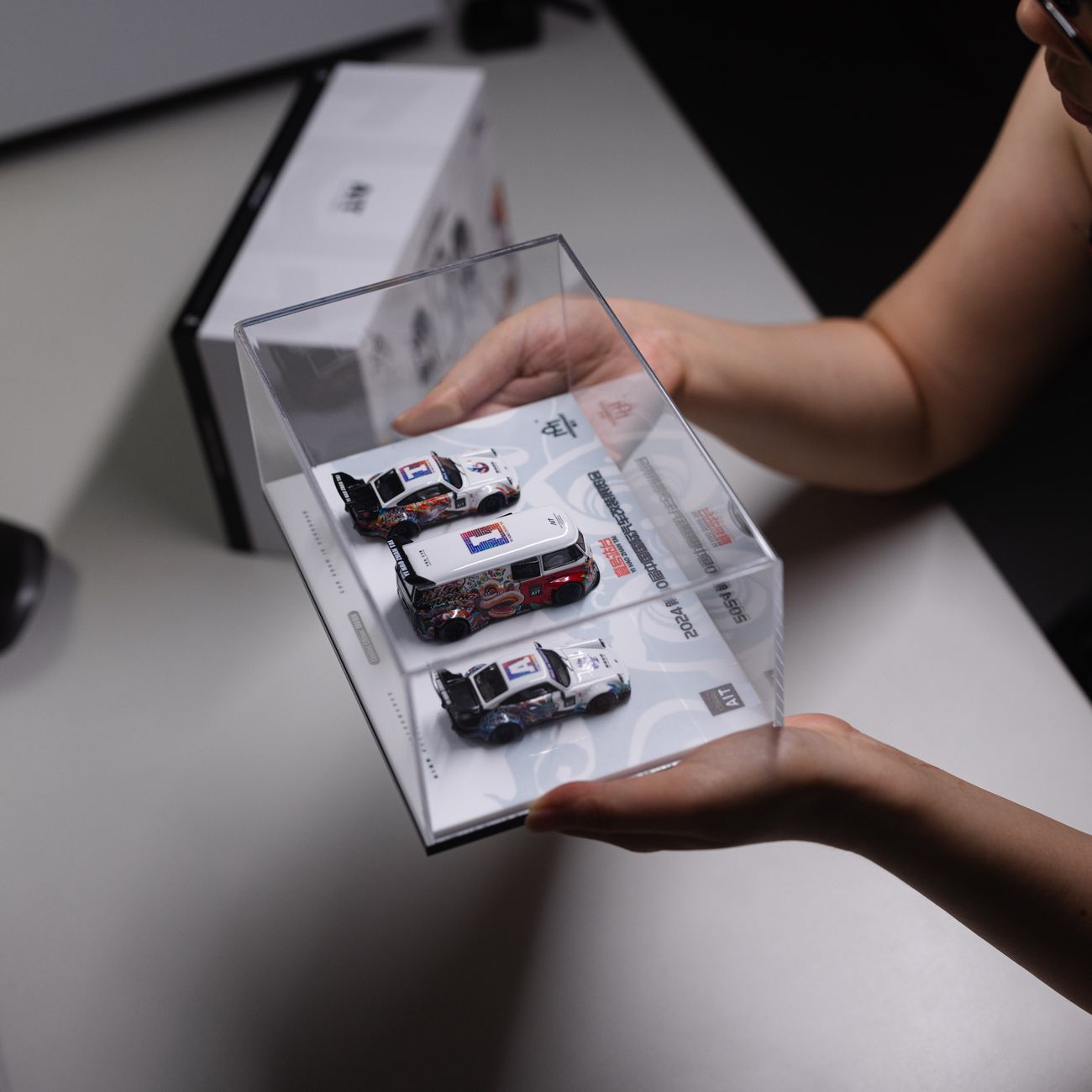
Cleaning is easier when there is less dust to remove. Enclosed display cases, a glass-front cabinet, or individual acrylic boxes keep the bulk of airborne dust off a model and hold humidity steadier than open shelving. LED lighting is the safer display choice because it produces little heat, while traditional bulbs can warm a confined case and accelerate paint and plastic aging. For setting up the shelf itself, our die-cast storage and display guide covers case selection and long-term protection.
Keep models out of direct sunlight even inside a case. Ultraviolet light fades paint, yellows clear plastic, and hardens and cracks rubber. If a shelf faces a window, consider a curtain, UV-filtering film, or relocating the display. A light dusting pass with the soft brush every few weeks prevents the heavy buildup that forces a deeper, riskier clean later.
Common red flags
- Household glass spray on clear windows. Ammonia-based products haze acrylic and polycarbonate. If the label does not say it is safe for plastic, it is not safe for your model.
- Paper towels and dry cloths. They leave fine swirl marks where the finish is soft. Use microfiber and a damp method instead.
- Soaking the model. Trapped water inside the body rusts axles and bases long after the outside looks dry.
- Anything labeled polish or wax. A collectible diecast finish does not need it, and abrasives or solvents damage paint and tampos.
- Displaying in direct sun or under hot bulbs. Fading and cracked rubber happen slowly, so the damage is only obvious once it is too late.
Final practical advice
Most diecast cleaning mistakes come from wanting to be thorough: scrubbing harder, reaching for a stronger cleaner, soaking the car to get it spotless. The practical rule is the opposite, be gentle and do less. Lift dust with a soft brush, use plain water and mild soap on paint, treat windows as the fragile surface they are, and keep the collection in a case away from sunlight.
If a model is genuinely dirty and you are unsure a cleaner is safe, test it on a hidden area first, a wheel underside or the base plate, and wait to see how the surface responds. A model cleaned carefully once every few months will look better in ten years than one scrubbed weekly with the wrong cloth. Protecting paint, windows, and wheels is mostly a matter of using the softest tool that gets the job done and leaving aggressive products in the kitchen.
Notes
[1] Clear plastic windows on diecast models are typically polycarbonate or acrylic. Both are sensitive to ammonia and alcohol, so household glass cleaners are not recommended.
[2] Tampo printing is the standard method for applying graphics to diecast bodies. The printed layer sits on the paint and can lift under harsh rubbing or solvents.
[3] Ultraviolet light is a documented cause of paint fading, clear-plastic yellowing, and rubber degradation in diecast collectibles, so display guidance recommends avoiding direct sunlight.