

Updated August 2026. Historical facts describe the hobby; they do not predict prices.
Stamp collecting developed from a simple habit of saving unusual postage into a research-heavy hobby with its own catalogues, terminology, dealers, exhibitions, and expert services. The appeal is not limited to rare stamps. Ordinary issues can document technology, politics, design, travel, and everyday postal use.
How the hobby developed
As postage stamps circulated, recipients saved examples that caught their attention. Albums and printed guides helped collectors organize issues by country, date, denomination, and design. Over time, collectors began recording details that are easy to miss, including perforation measurements, watermarks, paper types, printing varieties, and cancellations.
Why catalogues matter
A catalogue is a starting point for identification, not a promise of market value. It can help you distinguish similar issues and locate specialist terminology. Always record which catalogue and edition you used because numbering systems and valuations can change.
Condition is part of the history
A stamp’s condition includes centering, gum, perforations, paper, color, faults, and cancellation. A used stamp on its original cover can be more informative than a clean loose example because the cover records where and when the stamp was used. Removing it can destroy evidence.
Errors and varieties
Collectors should distinguish a documented printing variety from a damaged or altered stamp. A shifted design, missing color, inverted element, or unusual perforation needs comparison with specialist references and, for important pieces, an independent expert opinion. A seller’s use of the word “error” is not enough.
Building a useful collection
Choose a scope you can explain in one sentence. Examples include a country during a defined period, postal routes, a subject, a printing process, or covers from a particular region. Keep purchase notes, source information, and condition observations with the collection.
Bottom line
Stamp collecting became a serious hobby because the objects carry evidence. Study the issue, preserve the context, and question confident price claims. A well-documented modest collection is more useful than an expensive group that cannot be identified.
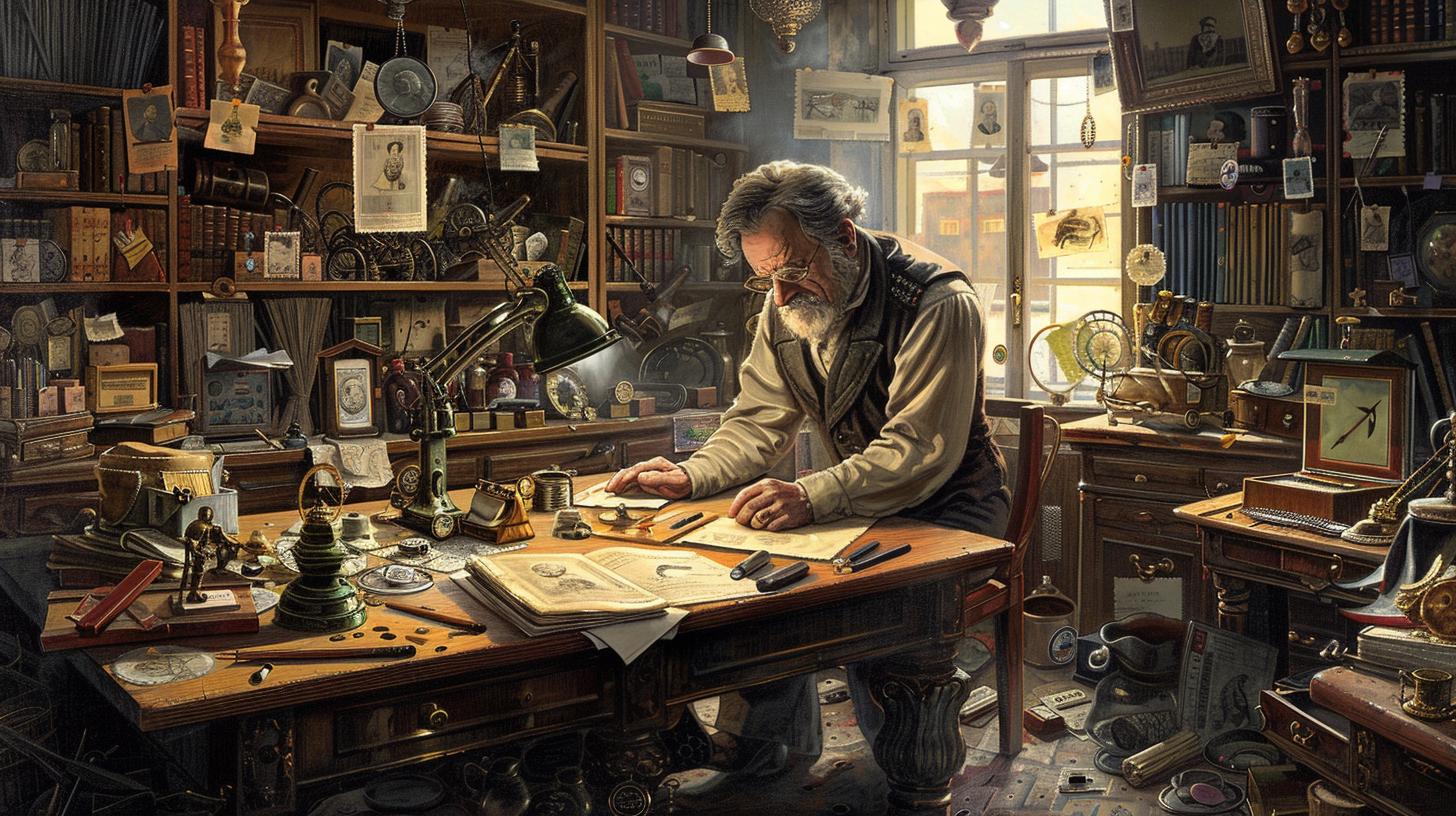
Philatelic collection example.
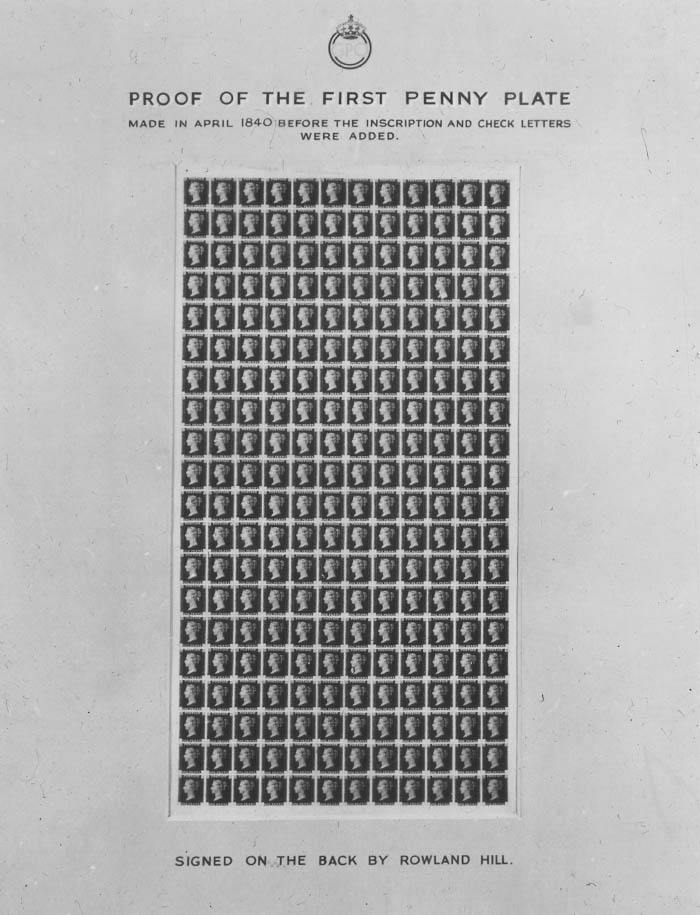
Historical stamp example.

Stamp-study example.
Notes
[1] Postal museums, national postal authorities, and philatelic federations provide primary historical material for stamp issues and postal systems.
[2] Specialist catalogues and certificates should be treated as identification and condition resources, not guaranteed selling prices.
I love stamps