
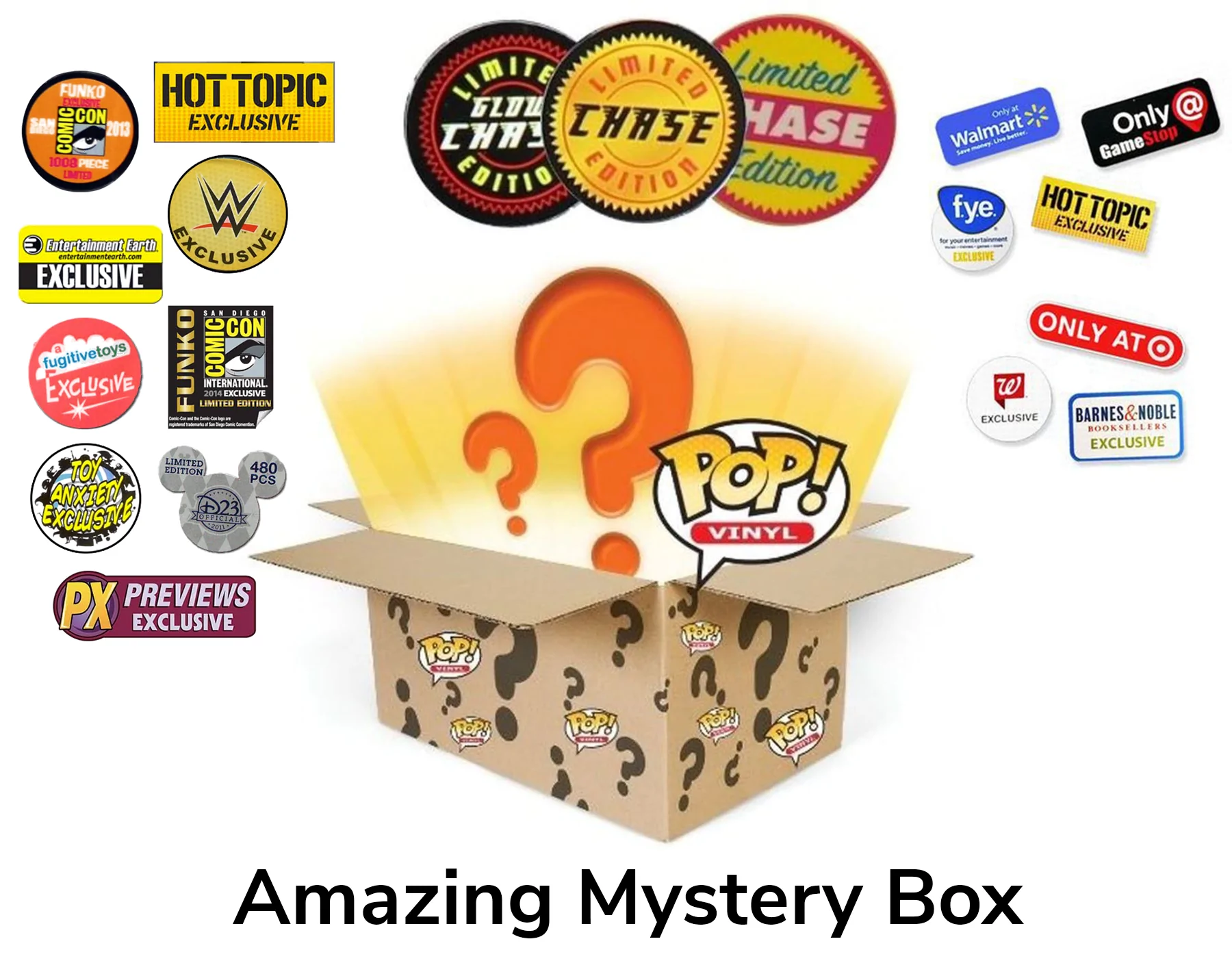
Stickers on Funko Pop! boxes are small labels with a big effect on how collectors describe a figure. A sticker may identify a retailer, convention, licensing program, release type, or special finish. It can help explain where a particular box or figure came from, but it is not a complete certificate of authenticity and it is not a guarantee of rarity or value.

The safest way to read a sticker is as one piece of release information. Match it with the figure number, box artwork, copyright text, manufacturing details, packaging condition, and a reliable reference for that release. The glossary below separates terms that are often mixed together.
Common release and sticker terms
Chase
A chase is a deliberately less-common variation of a standard release. The variation may involve a different pose, color, outfit, expression, accessory, or another design detail. “Chase” describes the relationship between the regular version and the harder-to-find variant; it does not mean that every chase has the same production quantity, demand, or resale value. A chase sticker, when used, should be checked against references for that specific product rather than treated as proof by itself.
Exclusive
An exclusive is a release associated with a particular retailer, distributor, membership program, or sales channel. The sticker commonly names the partner or channel. Exclusive describes distribution, not automatically scarcity. A product can be exclusive to one seller while being produced in a substantial quantity, and availability can change through restocks or later releases.
Event
An event sticker identifies a figure connected with an organized event, such as a convention, fan gathering, or promotional appearance. The label can mark an event-specific distribution route or packaging version. It does not, on its own, prove that the figure was physically purchased at the event, that the event version is the rarest version, or that the item will command a premium.
Special Edition
Special Edition is a broad marketing and distribution label used on some products sold outside an original exclusive channel or on releases with a particular retail arrangement. The exact meaning depends on the product and its release history. It should not be read as a universal grade, rarity tier, or condition statement. The words on the sticker matter less than the documented identity of the figure and the details that distinguish one release from another.
Common finish and design terms
Flocked
Flocked figures have a soft, textured coating applied to some or all of the figure to imitate fur, fabric, or another tactile surface. The finish is a physical characteristic of the figure, not merely a box label. Inspect the coating for consistency, wear, loose fibers, and damage. A flocked sticker can support the identification of a flocked release, but it cannot establish that the figure is genuine without checking the figure and packaging together.
Glow
Glow indicates that one or more parts of the figure are designed to emit visible light after exposure to a suitable light source. Glow effects vary: some pieces glow more strongly or for longer than others, and the effect can fade until the figure is recharged. A glow sticker is an identification clue, not a laboratory test. Compare the colors, sculpted parts, and packaging with known examples, and avoid treating a weak glow alone as evidence of a fake.
Glitter
Glitter refers to a surface treatment containing visible reflective particles. It may cover the whole figure or selected areas. The amount and placement of glitter can be part of the intended design, so photographs and product references are useful when comparing examples. Glitter does not automatically mean a figure is a chase, an event release, or a high-value item. It describes a finish unless the release documentation says otherwise.
Scented
Scented figures have a fragrance incorporated into or applied to part of the product. Scent strength can change with age, storage, heat, and exposure to air. A faint or missing scent is not enough to authenticate or reject a figure, and adding fragrance to an ordinary figure would not make it an official scented release. Check the sculpt, packaging, and documented release details as well as the label.
What stickers can and cannot prove
A sticker can provide useful context: it may point to an intended retailer, event, finish, or distribution version. It may also help a collector compare a boxed example with catalog photographs. However, stickers alone do not establish:
- Authenticity: Counterfeiters can reproduce printed labels, and genuine boxes can be paired with the wrong figure.
- Rarity: A label does not disclose the actual production quantity or how many examples remain available.
- Value: Price depends on authenticity, condition, demand, completeness, release history, and current market activity. A sticker is not a price guide.
For a careful check, compare the box and figure as a set. Look at the product number, character name, sculpt and paint details, copyright and manufacturer information, print quality, box construction, and any differences between known regular and variant releases. Be cautious with loose figures, replacement boxes, damaged packaging, and listings that use a sticker as their only selling point. If the item is expensive or disputed, seek an experienced collector’s opinion or a specialist authentication service before paying a premium.
Notes
Source notes: Funko product packaging and release labels use terms that can vary by product, market, retailer, and release period. “Chase,” “exclusive,” “event,” “Special Edition,” and finish labels should therefore be interpreted against the specific figure’s documented release information. For buying decisions, consult Funko’s official product information where available, retailer or event records, established collector references, and completed sales rather than relying on a sticker alone.